
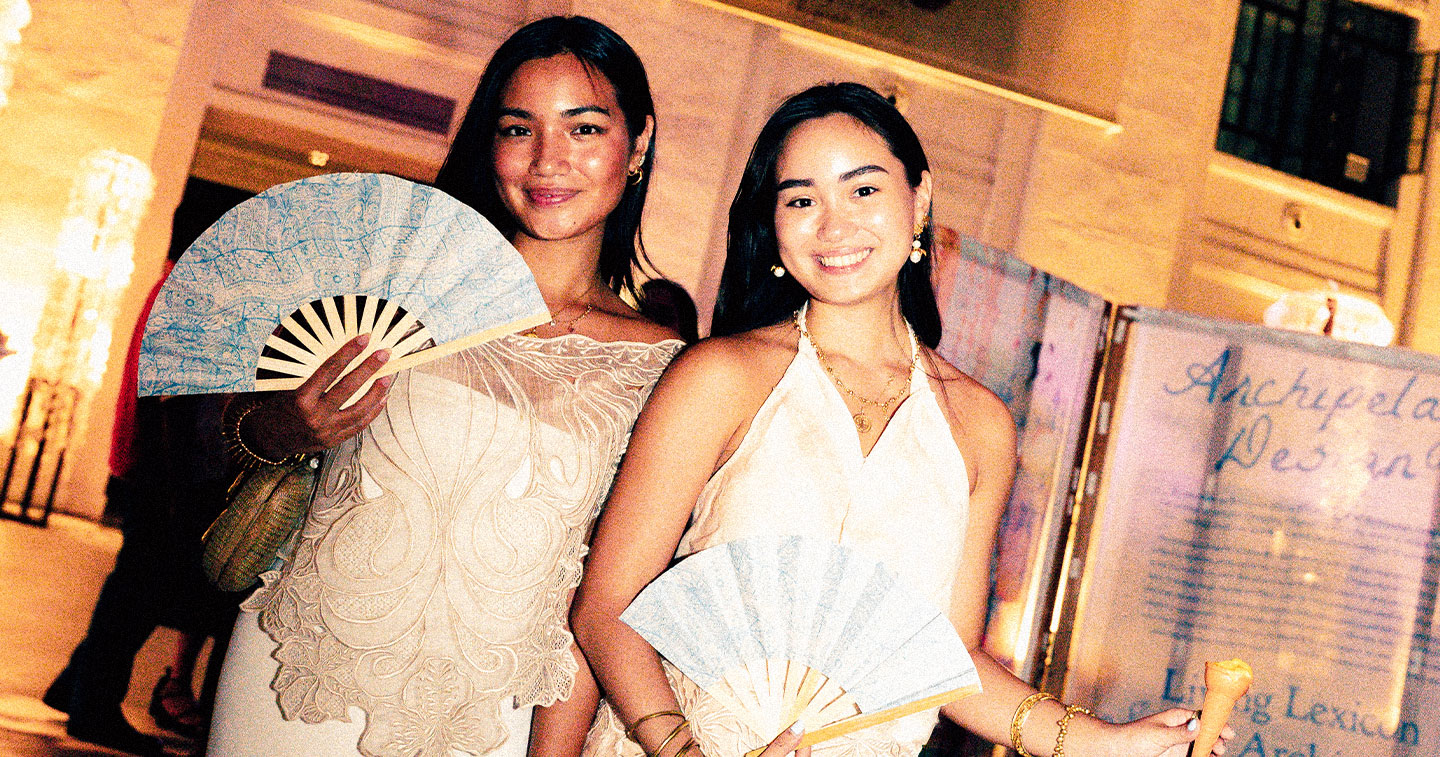

Filipino design has often been embodied in objects such as woven textiles, indigenous motifs, tropical palettes, handcrafted furniture, and vernacular architecture. But what if Filipino design isn’t defined by how it looks at all? What if it is defined by the way it thinks?
That question sits at the heart of archipelagic design, the philosophy championed by Filipina designer, fine artist, and National Geographic Explorer Natasha Tanjutco, whose interdisciplinary practice blends art, craft, and design to co-create ecological restoration and cultural systems transformation alongside local and indigenous communities.
Natasha is the co-founder of TAYO Archipelagic Design & Experience Agency, the country’s first women-led archipelagic design studio and sustainability consultancy, which she established with her sister Isabella in 2018. Since then, TAYO has delivered more than 100 culture-based design projects that bridge creative practice, environmental stewardship, and community collaboration.
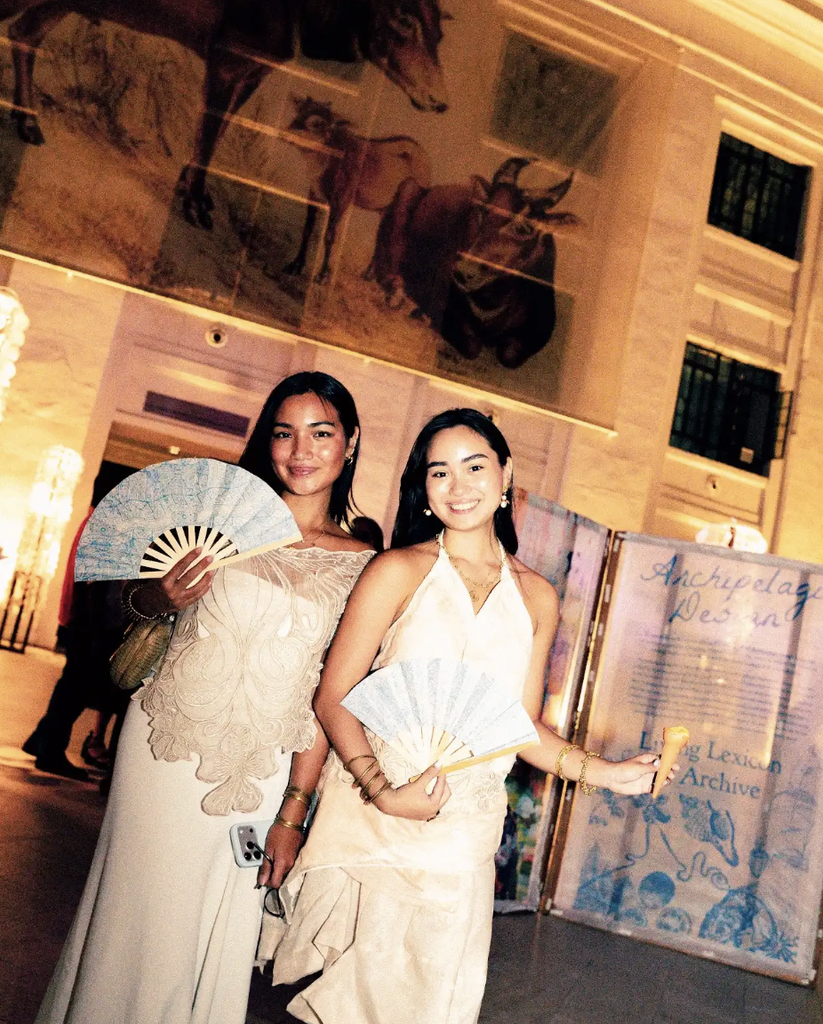
Beyond the studio, she serves as Creative Director and Board Member of TUKOD: The Filipino Design Foundation, the Philippines’ first accredited design foundation dedicated to democratizing access to neo-vernacular art, craft, design, and creative industries. Working with youth networks across different regions in the country, TUKOD is developing tropical island design hubs that place culture and climate resilience at the center of creative innovation.
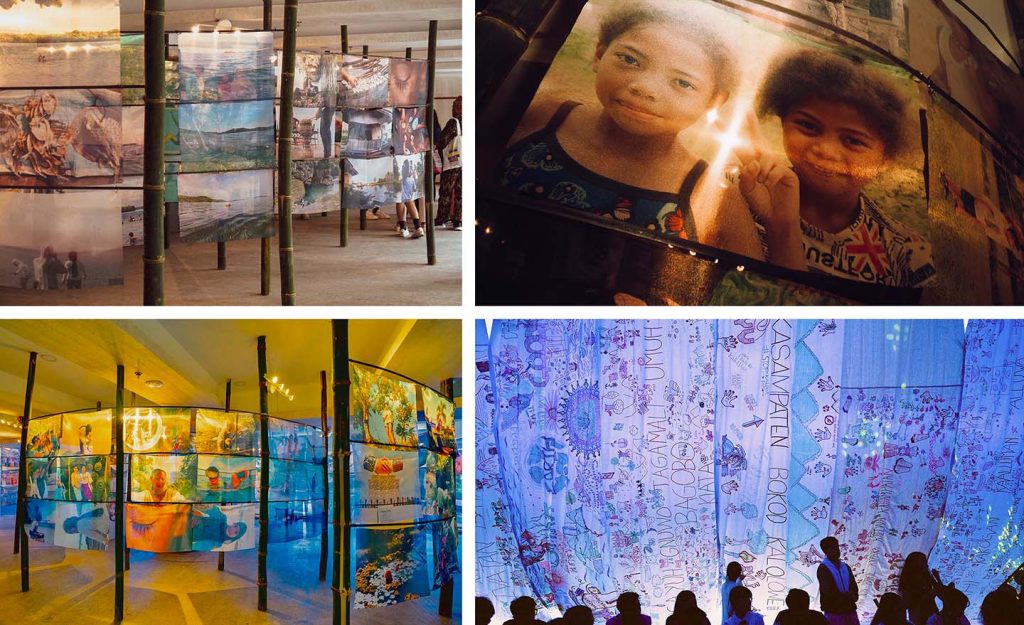
Her commitment to community-driven creativity began even earlier. In 2015, when Natasha was just 15 and Isabella was 13, the sisters founded Kids for Kids Philippines, a youth-led movement that has spent the last decade building creative hubs for climate solutions across the Philippine islands. Natasha is also part of “KAPULUAN,” an ongoing National Geographic-supported book and film project co-authored by more than 700 young people across the Philippines and its diaspora, exploring stories of identity, islands, and belonging.
Taken together, these initiatives reflect the same philosophy that underpins archipelagic design: that creativity is not confined to studios or cities but grows through relationships between communities, cultures, and ecosystems.
Rethinking Filipino identity through geography
For Natasha, archipelagic design emerged from questioning the Western frameworks that continue to shape the creative industry.
“For my sister and I, archipelagic design was something that we decided would be our central philosophy when we realized a lot of the design industry is heavily influenced by Western practices, where they silo and create divisions amongst different design industries,” she shared with adobo Magazine in an exclusive interview.
Instead of adopting rigid categories, the philosophy draws inspiration from the Philippines’ geography.
“These practices are like individual islands… But in the end, they’re actually all connected by the same culture, much like how our islands are actually connected by the water versus divided by them,” she underscored, adding that water, often perceived as separation, instead becomes a symbol of exchange.
“A lot of people don’t realize water is actually a channel for communication.”
WIth this mindset, Natasha argues that Filipino creativity has always thrived through collaboration.
“Rather than seeing different design industries as siloed, the way we communicate our spirit and our language as Filipinos really is always about collaboration.”
Creating a language for Filipino design
One of the biggest challenges, Natasha believes, is that Filipino design still lacks a language of its own.
Around the world, countries have shaped global conversations on creativity through ideas that extend beyond aesthetics. Japan, for instance, has introduced concepts like ikigai and wabi-sabi—words that have become shorthand for entire philosophies of living, making, and designing. For Tanjutco, the Philippines is no less rich in cultural thought. The difference is that many of its concepts remain underexplored within contemporary design.
“Examples are the concepts of kapwa or malasakit or ginhawa, kaligtasan—all these concepts that exist very uniquely Filipino. How do we interpret those things in design?” she asked.
It is this question that drives archipelagic design. Rather than defining Filipino identity through familiar visual cues including woven textiles, indigenous patterns, or tropical motifs, Natasha argues that the country’s creative identity should be rooted in the values that have long shaped how Filipinos relate to one another and to the world around them.
For her, the future of Filipino design is not simply about creating objects that look local. It is about creating experiences, systems, and ideas that embody kapwa, express malasakit, nurture ginhawa, and contribute to kaligtasan. These concepts become more than cultural references; they become design principles.
“Beyond the materiality of being Filipino, there is also the spirit and the soul,” she says.
In doing so, Natasha hopes to shift the conversation from what Filipino design resembles to what it represents, positioning creativity not merely as an expression of culture, but as a living language capable of carrying Filipino values into the future.
From post-colonial identity to cultural regeneration
Archipelagic design is also an invitation to rethink one of the longest-standing narratives about Filipino identity, per Natasha.
For generations, conversations around Philippine culture have often been framed by colonization—what was lost, borrowed, or imitated after centuries of foreign rule. The result, she says, is a persistent belief that Filipinos lack a cohesive identity or remain trapped by colonial mentality. As a result, archipelagic design challenges that assumption.
Rather than viewing colonization solely as a story of cultural fragmentation, Natasha sees it as evidence of the Filipino capacity to adapt without losing its essence. Throughout history, Filipinos did not simply replicate foreign influences; they reshaped them, weaving them into local traditions, beliefs, and ways of life until they became unmistakably their own.
“Instead of copying, what the Filipino did was adapt… making it uniquely Filipino,” she explained.
To her, that instinct to reinterpret rather than imitate is itself a defining characteristic of Filipino creativity. It reflects a culture that has continuously evolved by responding to change while remaining deeply rooted in community, place, and lived experience.
This is why archipelagic design is less concerned with reclaiming a romanticized past than with building a more intentional future. It encourages designers to interrogate the systems inherited from colonial history—not to reject them outright, but to understand which ones still serve Filipino communities and which ones should be transformed.
“Archipelagic design is this post-colonial movement that starts to question the systems that have been in place for so many years, and how we can deconstruct that and gain a sense of identity that we can call our own.”
For her, cultural regeneration is not about returning to a pre-colonial past. It is about recognizing the Filipino imagination as something that has always been dynamic in capability to absorb influences, create new meanings, and shape a creative identity that continues to evolve on its own terms.
A movement bigger than design
As conversations around Filipino design increasingly embrace Indigenous aesthetics, Natasha also noted that appreciation should never stop at appearances. Too often, she says, traditional weaves, patterns, and motifs are borrowed for logos, campaigns, products, or textiles without acknowledging the communities, histories, and belief systems they come from. While these visual elements have become recognizable symbols of Filipino identity, reducing them to decorative assets strips them of the cultural knowledge they carry.
“We need to acknowledge and honor that there are deeper stories and histories behind all these motifs and patterns,” she underscored, emphasizing that the true value of Indigenous knowledge extends far beyond craft. Embedded within these traditions are generations of ecological wisdom such as ways of building, creating, and living that work with the rhythms of nature instead of against them.
“When we’re talking about indigenous systems and technologies, it isn’t just the crafts, but the understanding of how to work and live with the earth and do that in a way that regenerates it rather than exploits it.”
It is a perspective that fundamentally reshapes how sustainability is understood. Rather than treating nature as a theme to reference or an aesthetic to emulate, archipelagic design positions the natural world as the very foundation of every creative process.
“Nature should not just be an aesthetic or a topic when you’re talking about sustainability. Nature in itself is the very foundation for every single design practice.”
This shift, Natasha argues, asks creatives to move beyond designing for nature and instead begin designing with it. In her vision, creativity is no longer an exclusively human endeavor but a collaborative act between people, place, and the living systems that sustain both.
“The only way to actually create good is by making nature your co-author in everything that you do,” she said. Her words imply that the future of Filipino design will not be defined solely by how well it celebrates culture, but by how deeply it learns from the ecological intelligence that indigenous communities have safeguarded for generations, transforming design from an exercise in aesthetics into an act of stewardship.

Ultimately, Natasha believes that archipelagic design was never meant to remain within the confines of the creative industry. It is, above all, a cultural movement—one that asks Filipinos to see themselves, their history, and their future through the interconnectedness of islands, communities, and the natural world.
“For us, archipelagic design is this movement of connecting back to nature, understanding how geography, history, and the stories of your ancestors intersect with everything that you do,” she said.
The philosophy is as relevant to branding and advertising as it is to architecture, fashion, filmmaking, product design, and public spaces. Regardless of the medium, Natasha believes every creative decision begins with the same fundamental question: “Who are we truly designing for?”
“No matter how simple the project might be, whether you are designing packaging for dog food, or a juice box, or a logo for a restaurant, all these things go back to unearthing what you’re actually designing for and who you’re designing for.”
Her answer consistently returns to one deeply Filipino idea: kapwa. More than empathy or community, kapwa recognizes the shared self or the understanding that every act of creation inevitably affects others. In this sense, design becomes less about individual expression and more about cultivating relationships—whether with people, culture, or the environment.
“We must continue designing with a feeling to bring soul back into design.”
At a time when artificial intelligence accelerates creative production, climate change reshapes how societies live, and globalization continues to blur cultural identities, Natasha sees that the Philippines has an opportunity to offer something the world increasingly needs. Not another visual trend or exportable aesthetic, but a design philosophy grounded in care, collaboration, and regeneration.
Essentially, archipelagic design is an invitation to think beyond national borders without losing sight of one’s roots.
“As Filipinos, it is up to us to champion this idea of archipelagic design and broaden our horizons beyond our borders and see the world as an archipelago,” Natasha concluded.
READ MORE:
The lies advertising tells itself about creativity—and why Jayel Ladioray wants to end them
Heritage is not static, and ArteFino has spent a decade proving it