


In an era obsessed with the “next big thing,” global marketing leader and newly minted Association of National Advertisers (ANA) Chairperson Dean Aragon is preaching a different gospel: the “last big thing” is still the human being.
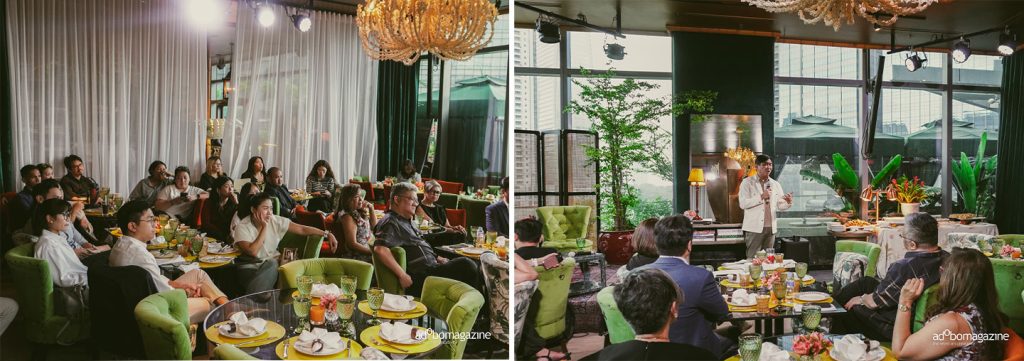
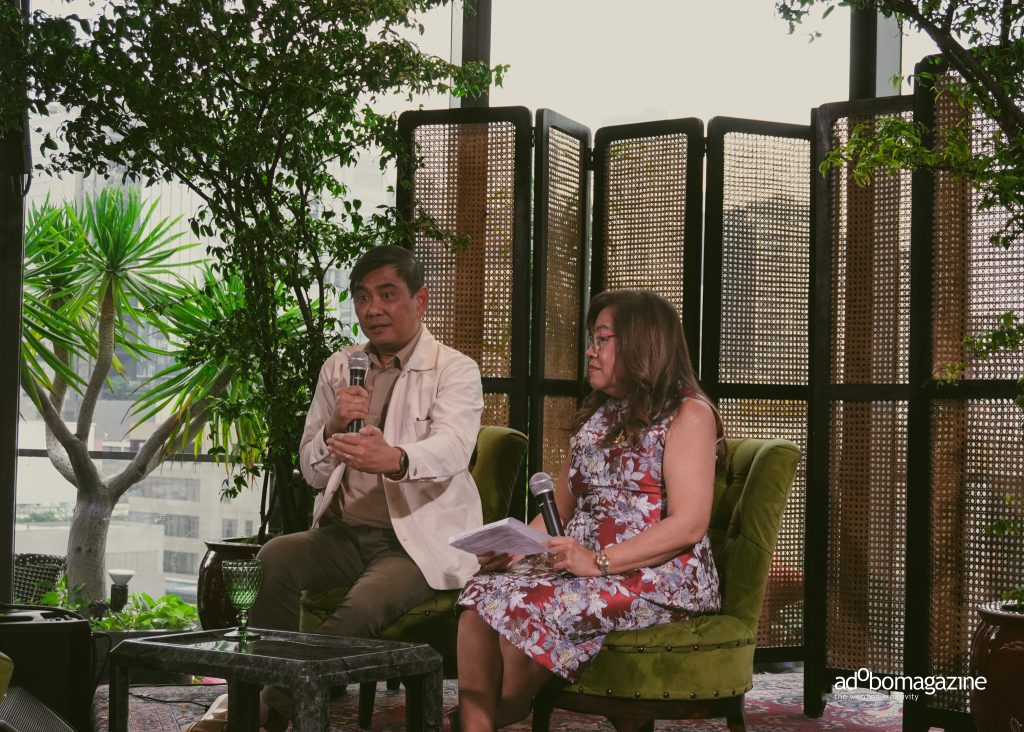
During the VML Manila and adoboTalks fireside chat between Dean and adobo Magazine Founder, President and Editor-in-Chief Angel Guerrero, he shared his views on the future of marketing, touching key points across artificial intelligence, creativity, inclusion, effectiveness, and talent.

Drawing from his decades of global marketing experience, Dean offered a perspective that turns the typical tech-driven narrative on its head, placing humans, purpose, and outcomes at the center of how we think about the future of the industry.
Rather than treating the future of the creative industry as something to be engineered, he framed it as something that can be better understood by diving into humanity and challenging the prevailing anxiety around AI.
“AI is not a disruption per se. It’s the people who know how to use AI disruptively in their jobs who become the disruptors. My invitation to all of you — unless you’re pure technologists or scientists in artificial or augmented intelligence — is not to obsess over the technology itself. Instead, obsess over the job to be done,” Dean said.
“What are you trying to achieve? Is it market penetration? Selling to new segments? Growth against a competitor and gaining market share? Is it about shifting reputation?”
Dean adds that AI should not turn marketers into “wannabe technologists” who chase novelty for its own sake. Instead, they should focus more on the job that needs to be done.
“Only when you’re clear about the job to be done should you determine what technology you need to enhance its delivery.”
The 3 tiers of AI
Dean simplifies the role of AI in modern marketing by distilling it into a powerful three-tiered framework.
He begins with efficiency, acknowledging AI’s ability to scale tasks with speed and at lower cost, yet he warns that efficiency is a “zero multiplier” if the output lacks substance.

“Efficiency without effectiveness is a zero multiplier. You can have a cost-friendly, efficient, accelerated delivery of something that doesn’t make sense. That’s still a zero multiplier — because a billion technology points multiplied by zero substance or zero effectiveness is mathematically zero,” he explained.
This leads to the second pillar, effectiveness, where the focus is on driving real-world outcomes. For him, an efficient delivery of a meaningless message or strategic misdirection is still a failure.
“You need effectiveness to be hand in hand with efficiency. Otherwise, it’s just an efficient solution looking for a problem.”
Moreover, Dean argues that the true “magic” of AI lies in elevation. At this level, AI transcends simple automation to become a partner in strategic or commercial provocation, allowing marketers to ask bolder questions and design innovative systems that were previously unimaginable.
“I like to propose an elevation of thinking, because AI now allows you to ask questions you never dared to ask, to imagine possibilities, and to create new models, new systems, and new propositions you once thought were out of reach. Now you can. Nothing is too crazy — you can engineer the prompt or embark on large-scale analytics and you might be surprised by the answer,” he noted.
Inclusion and B2B marketing
One of Dean’s most provocative assertions is that business-to-business (B2B) marketing is where the future lies. With this in mind, he questioned whether society truly needs another FMCG offer. What it does need are solutions that sit higher up the funnel and that cover among others: education systems, healthcare programs, climate responses, and urban infrastructure.
“I don’t think the world needs another coffee brand. I don’t think the world needs another sneaker brand. By ‘needs,’ I mean these aren’t the biggest challenges facing us. But the world does need new educational curricula that are future-proof. It needs more democratized healthcare programs. It needs more pragmatic climate solutions. It needs inventive urban planning mechanisms to address very congested cities like our own Metro Manila.”
“I see these as the upper-end, foundational challenges that societies, companies, or nations must confront and address. They must first adopt potential solutions before they can be adapted into propositions, offers, or products for the market,” he added.
Dean, however, is quick to dismantle the false divide between B2B and business-to-consumer (B2C). At their core, Dean said, both are B2H or business-to-humans. The difference is not whether you are speaking to people, but how.
B2B marketing addresses buyer groups which include committees shaped by risk, reputation, and defensibility. In such environments, brands matter enormously.

“It doesn’t matter whether it’s B2B or B2C. It’s always B2H — you’re always marketing to humans. The biggest difference is that B2C marketing is to individuals, while B2B marketing is to groups of people, or buyer groups,” Dean underscored.
He added, “It’s certainly not entirely about the best product or the best price, it’s often what is most defensible to the group.”
Meanwhile, Dean, who is also the CEO and Vice Chairman of Shell Brands International, similarly addressed inclusive marketing, reframing it as a growth strategy. Inclusion, in his view, is about widening the addressable market, recognizing underserved audiences and designing products, messages, and experiences that speak to more people, not fewer.
Commercially, we need to remember that growth is a game of addition and not a game of subtraction,” he noted.
However, He qualified that inclusion should not dilute positioning. The most successful brands remain steadfast in what they stand for while being broad and far-reaching on whom they serve.
“Inclusive marketing is really about marketing to as many people as you can. It’s about widening your embrace, not narrowing it.”
The three abilities of creative effectiveness
Dean also offers a refreshingly clear definition of creative effectiveness. For all the complexity that now surrounds marketing including dashboards, models, frameworks, and post-campaign analyses, he believes creative effectiveness is actually quite simple, and it starts with being honest about what marketing is meant to do.
“Creative effectiveness is quite simple. No matter what you do in marketing or advertising — whether the impact is direct or indirect, short-term or long-term, single or multiple — it must lead to three abilities,” Dean said.
The first ability is the ability to sell more. In this aspect, marketing must create demand, drive preference, and translate into increased volume. Without this, creativity becomes detached from commercial reality.
The second ability is more demanding and, in many ways, more revealing of true brand strength: the ability to command a premium.
Sustainable growth, according to Dean, cannot rely on constant promotions or tactical price cuts. Instead, brands must build pricing power or a brand’s intrinsic strength to maintain or even grow volume despite higher prices.
The third ability speaks to expansion rather than optimization or the ability to sell to new segments. For Dean, effective creativity does not merely persuade the same customers to buy again; it opens doors to new audiences and new use cases. This means identifying a previously untapped group as a distinct microculture or reframing the category in a way that invites new participation altogether.
Dean underscored that when marketing delivers one or more of these abilities, there is meaningful outcome. Throughout his talk, he was careful to distinguish between two very different paths to growth.
The first is what he calls the “re-slicing” of the pie. It deals with brands battling over the same customers, the same demand, and the same finite share. This approach, he warns, is often value-destructive, leading to margin erosion and a war of attrition.
The alternative, and his clear preference, is growing the pie itself wherein pie growth creates real expansion such as new segments, new jobs, and new innovation. It benefits not just individual brands, but entire sectors and economies. For him, this is the higher ambition of marketing: by not just winning, but enlarging what is possible.
“When you grow the pie, it leads to real growth: more jobs, new segments, and more innovation, rather than a war of attrition. The invitation, then, is genuine growth — not just individual growth, but growth of the industry, the sector, and the economy. I prefer a pie-growing game over a re-slicing game,” he said.
Culture as the foundational anchor point of creativity
Currently, marketing often feels dominated by viral trends, flashy production, and vanity metrics, making it easy to mistake creativity for freedom without boundaries. But for Dean, the most effective creative work isn’t about breaking rules for shock or spectacle — it’s about connecting deeply with people, culture, and the truth of the brand.
“I believe the most powerful creative strategies and executions are deeply rooted in culture or subcultures. Whether it’s a Jollibee ad that taps into nostalgia and relationships with your lolo or lola, or a GIGIL agency execution built on Pinoy humor, the ones that work are truly grounded in culture. The ones that don’t are brands trying to be something they’re not — work that’s not rooted in anything and is purely transactional,” he implied.
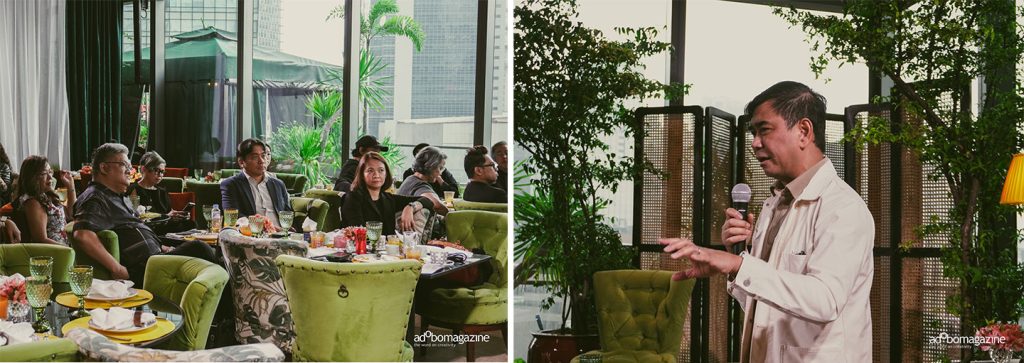
Dean also tackled the limits and purpose of creativity in marketing. He cited differentiation as a foundational anchor point of creativity, foregrounding on “pertinent differentiation” where a brand should stand out in a way that is meaningful and relevant to its audience.
“Differentiation matters, but it has to be pertinent differentiation. There’s such a thing as impertinent differentiation — when it’s not relatable or authentic to the brand. You can create striking executions, motifs, or production values, but if they’re not true to the brand or category, then they don’t evoke anything real. That’s where creativity can sometimes be overplayed and lose effectiveness.”
Nonetheless, even in today’s data-driven, intelligence-heavy marketing world, Dean stressed that understanding culture deeply is more important than chasing tools or trends. Creativity becomes powerful only when it reflects real human experiences, cultural norms, and the authentic personality of the brand.
“Creativity is not a license to do anything. It has to exist within the boundaries of what the brand and product are about — differentiating in a way that creates meaningful connections and secures loyalty. That’s what leads to creative effectiveness. So yes, I believe in creativity, but it has to be defined within those parameters. Even with all the data and intelligence available, what matters most is how deeply rooted you are in understanding culture,” he noted.
The chemist and the alchemist of marketing
Dean went on about what he thinks of the future of marketing, arguing that the marketers of the future must be “chemists” and “alchemists” at the same time.
Chemist marketers are grounded in hard science. They understand data, analytics, technology, generative AI, language models, and traditional AI, not necessarily as engineers, but as skilled users and even super-users. This fluency appeals to the rational, analytical side of the brain and ensures that marketing decisions are informed, scalable, and accountable.
However, per Dean, chemistry alone is not enough. Marketing also needs alchemists or those who can work with emotion, intuition, culture, and meaning. These are the people who know how to turn insight into resonance, and strategy into story. As Dean pointed out, while the rational brain may conclude, it is the emotional brain that ultimately decides.
Nonetheless, the future belongs to those who can move between both worlds. Marketers who can dabble in chemistry while still weaving the magic of alchemy.
Dean ended the fireside chat with a reminder that feels especially urgent in an age of automation and optimization.
“I think that, in the future, it comes down to someone who can dabble in chemistry but also weave the magic — the wizardry — of alchemy, because we are human. I’ll end with this: when you forget that the humans at the heart of your business still have a heart, and you pretend they’re all brain, you start losing the game. You start losing relevance,” he said.
For him, when brands forget that the people at the heart of their business still have hearts — and treat them as nothing more than rational processors — they begin to lose relevance. But when marketers recognize that audiences are whole-brained, both rational and emotional, they gain something far more powerful than persuasion, they gain conviction.
“If you recognize that the people at the heart of your business are whole-brained, that they have a left, rational brain and a right, emotional brain then you have the ability to convince, and you also have the ability to convict. That’s a better, more enduring game,” he concluded.