


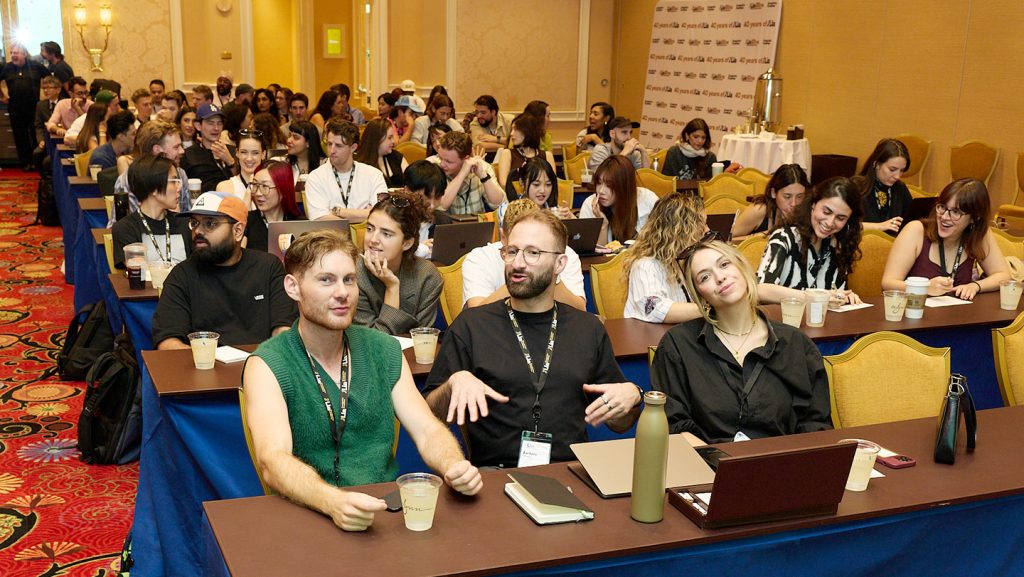
LAS VEGAS, USA – At the 2025 London International Awards (LIA) Creative LIAisons program in Las Vegas, 130 of the world’s most promising young creatives got an unfiltered glimpse into the reality of leadership in the creative industry.
Gathered on stage were five of advertising’s most influential creative minds: Chaka Sobhani (President & Global CCO, DDB Worldwide), Liz Taylor (Global CCO, Ogilvy), Gabriel Schmitt (Global CCO, Grey), Perry Fair (Head of Creativity, Mattel), and Peter Khoury (Regional CCO, TBWA\Asia and CCO, TBWA\Singapore) for the session titled, “Everything you ever wanted to ask a CCO, but were afraid to.”

Their conversation was part raw confession, part career masterclass. A spirited session that peeled back the layers of what it means to be a Chief Creative Officer in today’s fast-shifting, high-stakes industry.
Here are the key lessons from the talk: insights that spoke not just to the future CCOs in the room, but to anyone navigating the creative life.
Lesson 1: Leadership isn’t about control, it’s about creation.
“Some people think a CCO controls everything. Others think they do nothing. Both are true,” said Chaka with characteristic candor. Her point: the role of a CCO isn’t about managing every detail, but about creating space: for ideas, for people, for possibility. “You shouldn’t become a CCO for the paycheck or the ego,” she said. “You do it because you have the opportunity to create opportunities for others.”
For Liz, the biggest awakening came when she moved from ECD to CCO. “As an ECD, I thought the CCO made the work better. Then I realized it’s about setting the environment for creativity to thrive. You get to help people rise. You get to change lives.”
Lesson 2: It’s fancy and it’s sh*t, often at the same time
Gabriel’s viral-worthy quip about the “fancy and sh*t” duality hit home.
“When I wasn’t a CCO, I thought my bosses had glamorous lives. Then I saw the chaos. Both things are true,” he said. “A CCO is responsible for everything but controls nothing.”
Perry echoed this, revealing that the biggest change after his promotion was the avalanche of meetings. “My office is full of toys I never get to touch. Every hour is a meeting. Some are fun, some aren’t. That’s the job – trusting your people so the work can still come alive.”
Peter added that leadership isn’t a talent you’re born with, it’s a mindset you grow into. “No one is born a leader. You have to use both sides of your brain to create and to delegate. Anyone in this room can become a CCO if they truly believe it.”
Lesson 3: The words that define great work
Asked to describe the kind of work their agencies strive for in a single word, the answers revealed a shared belief in creativity’s purpose and power:
- Liz: “Iconic”
- Peter: “Disruptive”
- Perry: “Cultural”
- Gabriel: “Famous”
- Chaka: “Emotional”
Each word captures a creative philosophy. The balance between cultural relevance, emotional truth, and commercial impact.
Lesson 4: What CCOs really look for in young creatives
Forget flashy decks and clever layouts. The panelists were clear about what truly matters in a portfolio.
Gabriel said he looks for curiosity and breadth: “Early in your career, flex every muscle. Show that you can think from different angles.”
Chaka looks for passion: “I get bored just seeing ideas. I want to see what makes you tick — your point of view, your curiosity.”
Peter values self-motivation: “You can’t teach it. Self-driven people learn fast and push themselves further.”
Liz prizes quality over quantity: “I want to see the ‘holy f***, I wish I did that’ idea. I want to be surprised.”
Lesson 5: The underrated strengths: Relationships, curiosity, and voice
The panel agreed that being a great creative today means being T-shaped deep in one craft, but wide in interests.
For Gabriel and Perry, the real differentiator is the ability to build relationships. “Be friends with your account people,” said Schmitt. “Don’t stay siloed in your discipline.”
Perry added, “At Mattel, I’m both client and creative. Relationship-building takes you farther than pure creativity. Make your clients your partners.”
Chaka offered a powerful message particularly to the women in the room: “Find your voice and f****** speak up. There will always be louder people in the room. Don’t let them drown you out.”
Lesson 6: Pressure, vulnerability, and keeping it together
Even CCOs crack, and that’s okay.
“We’re CCOs but we’re also human,” said Sobhani. “We have lives, kids, mortgages. Sometimes you just have to say — it’s only advertising. Calm the f*** down. Vulnerability is strength.”
Peter shared how swimming keeps him centered: “It’s my meditation. Find something that grounds you. Advertising doesn’t offer balance, you have to create it.”
Gabriel agreed: “If you crack, your team cracks. Keep your relationships strong. Keep talking. Don’t isolate yourself.”
Lesson 7: Emotion is an advantage
When asked if they’d ever been told they were “too emotional,” the panel didn’t hold back.
Chaka’s response? “If someone told me that, I’d tell them to f*** off.”
Peter reframed emotion as a creative asset: “If emotion makes the work better, then embrace it.”
Perry added, “Creativity is emotion. Don’t leave it at the door — it’s your superweapon.”
And Liz, with a closing line that summed up the entire talk, said: “People might tell you you’re too emotional or talk too much about your kids. Be so good they can’t ignore you.”

The adobo takeaway: The CCO’s job is to create possibilities
The conversation was raw, funny, and profoundly real. Exactly what the next generation of creatives needed to hear.
Beyond the titles and trophies, the CCO role is about possibility: the ability to lead with empathy, to empower others, and to keep creativity human in an industry that moves at the speed of culture.
Because as Gabriel so perfectly put it, “A CCO’s life is fancy and sh*t at the same time.” And maybe that’s what makes it beautiful.