

The future of the advertising industry, once debated in conferences and prediction decks, has already arrived. Creatives no longer ask whether artificial intelligence will change advertising — it already has. The more pressing question now is what kind of industry will emerge on the other side of this rapid acceleration — one that will compel industry professionals to adapt quickly.
As the Philippine advertising industry looks toward the year ahead, one thing is clear: the future isn’t arriving quietly. It’s moving fast — powered by AI, pressured by debates over value, reshaped by shifting consumer behavior, and challenged by deeper questions about the role of agencies.
adobo Magazine spoke to some of the country’s leading creatives to garner their perspectives on this moment of transformation. From conversations with TREYNA Group Philippines Chief Creative Officer (CCO) Abi Aquino, BBDO Guerrero Creative Chairman David Guerrero, Dentsu CCO Jerry Hizon, VML Manila CCO Joe Dy, and McCann Worldgroup Philippines Executive Creative Director Dante Abelarde, a picture emerges of an industry caught in tension — full of opportunity yet fraught with uncertainty.
For these creative leaders, 2026 is about mastering agility and multidisciplinary skills, inspiring confidence that leadership can navigate this delicate balance without losing sight of human creativity.
AI will reshape processes
If 2025 was the year Artificial Intelligence became unavoidable, 2026 will be the year agencies must learn to live with it.
For Abi, the industry is in an “awkward dance with technology,” highlighting that some creatives are ahead of the learning curve while others are trailing behind. Advertising as we once knew it, she argues, is dead. But what has replaced it isn’t yet a refined new model; it’s anxious, scattered, and overproduced.

“It seems to be an era of overproduction, overtesting and overreaction,” she told adobo Magazine.
“AI sits at the center of this moment, and it’s being profoundly misunderstood. It is an intelligent tool, sure, but it’s one that exposes the intelligence (or lack thereof) of the person using it. AI will not make bad thinking better, it will simply make it faster,” she added.
This also rings true for Jerry, who acknowledged that AI tools are being used by agencies and clients alike. But as they become more integral to internal processes — automating tedious tasks, speeding up turnaround, and optimizing insights — risks are also growing, including the potential loss of craft, depth, and emotional intelligence.

“This is where human intervention is needed. Agencies that would leverage this will stand out versus brands and organizations that deploy AI-generated work as is,” Jerry said.
Meanwhile, Dante sees the 2026 advertising landscape defined by velocity when it comes to technology. Clients understand what AI can do, and expect agencies to move faster.
“Velocity will dial up even more. The arrival of AI is already beginning to change not just how agencies work, but also how brands think. Clients are already aware of these tools, and their expectations on what and how agencies deliver are changing,” he noted.
David, on the other hand, has seen how AI is reshaping the role of creativity within agencies.
“It will happen gradually and then suddenly. Gradually as we work out what to do with new technology and apply it in relevant ways, and then suddenly as we get used to employing it at scale.”

Joe echoed this sentiment Agencies, he argues, cannot “out-tech the tech industry.” AI should not be positioned as a product to sell, but as proof of the agency’s ability to deploy technology in the service of business solutions. For him, the real value of a creative partner lies not in prompts or output, but in seeing what isn’t written in black and white.
“The true value of a good creative and good agency person remains understanding the big picture and the client’s business, being able to see what is not on the brief and provide solutions. Plus our ability to sell these solutions of course,” Joe implied.
Will traditional agencies adapt — or disappear?
The advertising agency, once the undisputed powerhouse behind iconic campaigns, now stands at a crossroads. Technology is moving faster, audiences are more unpredictable, and the old rules feel increasingly fragile.
Despite the ongoing digital shifts, David remains a staunch believer in the agency’s core mission. He argues that the model’s longevity isn’t a fluke, but a result of its unique environment.
“The agency model has been remarkably resilient. It has evolved over time. But it has also consistently provided a home for some of the best creative minds… That will endure for as long as original ideas remain the currency of our world.”
For Guerrero, the “walls” of the traditional agency serve a purpose, protecting and nurturing the one thing machines and consultancies still struggle to replicate: the original idea.

On the other side of the coin, Jerry offers a starker reality check. In an era where the internet has leveled the playing field, “tradition” can quickly become a comfortable trap.
“The agency model has been evolving since the onset of the internet, and tradition is the fastest way to becoming obsolete,” he said. “The global networks are starting to deploy custom AI to expedite internal processes and offer their agentic and generative AI services to clients.”
Dante, meanwhile, views the current industry tension not as a binary choice between “old” and “new,” but as a matter of calibration.
According to him, the industry has always been in flux. The survival of an agency doesn’t depend on a total reboot, but on the speed of the pivot.
“Historically, the industry has always been evolving and shown resilience in adapting to the times. But change is a dial, not a switch, so big changes are seen clearly over time. The question is not whether the current model survives as-is, but how quickly leaders manage the changes needed to meet changing conditions,” he said.
And yet, change is accelerating at a pace few agencies can match. As Joe observes, the agency model has been evolving constantly for the past decade. Change is now happening faster, with many new agency models emerging.
“We see many attempts at fresh and experimental agency models being bandied about, some seem to be making headway, some not. Particularly as emerging indie agencies reinvent their offerings and networks consolidate theirs.”
How consumer attention, behavior, and trust will shift
Capturing consumer attention has never been easy, and this year, industry leaders agree that it will remain one of advertising’s greatest challenges.
David believes that the element of surprise still holds unmatched power. For him, it will be as hard to capture as it’s always been. But it will be caught in ways that don’t do the expected, rational thing.
“Surprise will always be the key to everything,” he said, highlighting that the element of the unexpected remains central to cutting through the noise.
Meanwhile, Jerry emphasized that the solution lies in human connection.
“Consumers would know if content is done by AI or humans… The consumer will seek content and experiences that make them feel more human and connect with humans,” he said.
Dante echoed this sentiment, underscoring the importance of genuine engagement.

“More entertaining, useful and seamless experiences will be rewarded. All this makes a customer-first approach more important than ever, and out-of-the-box creativity from every discipline more critical to stand out,” he explained.
Joe, otherwise frames audience attention as “emotional real estate,” cautioning against the pitfalls of intrusive marketing. He highlighted the need for campaigns that respect and engage audiences meaningfully.
“Advertising at its worst has always been intrusive interruption. At its best, it has been something we welcome, share and enjoy… More and more consumers don’t want their time wasted,” he said.
Platforms and formats that will define the advertising scene
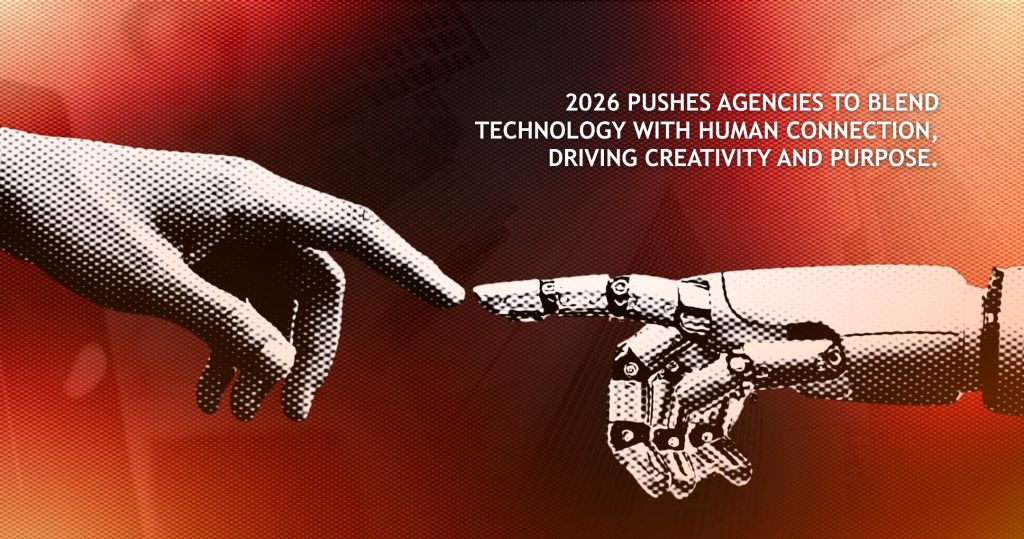
As the advertising landscape continues to evolve, the platforms and formats of 2026 will be defined less by novelty and more by purpose.
From David’s perspective, technology is a tool, not a replacement for creativity.
“Platforms and formats always need to serve the brand idea. Media and formats work to amplify the idea or strategy, not to take its place,” he said.
The next frontier may be surprisingly tactile as there will be a “rise in offline activations,” according to Jerry.
“Ideas that would make humans feel more human will be the key to consumer connection,” he noted, signaling a renewed focus on real-world experiences that foster genuine human interaction.
Dante, on the other hand, sees social media maintaining its stronghold.
“Ads as entertainment, like vertical storytelling, will play a bigger role, and connecting ads to e-commerce more seamlessly will gain more business,” he said.
The skills creative leaders will need
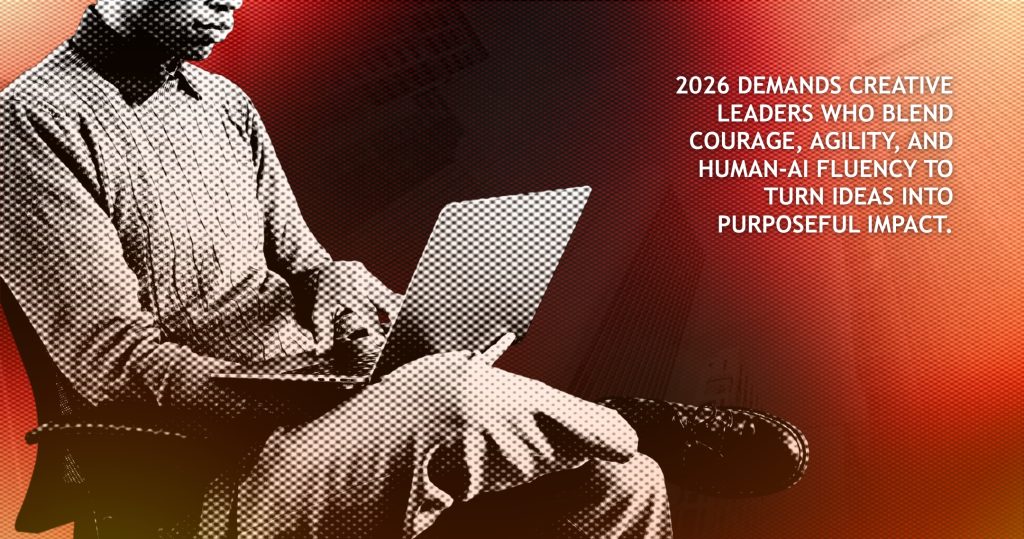
If 2026 promises accelerated change, then creative leadership will demand more than vision. It will require discipline, courage, adaptability, and a fluency in both human and technological intelligence.
David agrees that the future still rests on timeless fundamentals, saying that the ability to hunt down ideas and bring them to life is needed by creative leaders this year. This includes managing, motivating, negotiating, and inspiring teams, navigating complex stakeholder dynamics, and relentlessly pursuing great ideas.
Jerry likewise believes that courage will define the next generation of creative leaders.
“Courage to try something new. Courage to push forward despite what data says… AI still cannot create something original, so while we still can, we have the courage to do human things.”
Dante emphasizes the need for agility and cross-disciplinary thinking, pointing out that this multidisciplinary approach to marketing means “recognizing a wider range of skills and knowledge needed to go into the work.”
As boundaries blur between media, commerce, technology, and content, leaders must move fluidly across disciplines, understanding how each piece contributes to a cohesive brand experience.
Joe Dy pushes this even further, calling for hybrid mastery.
“We need to be a generalist and a specialist at the same time… Proficiency in AI will also be a standard skill. Like it or not, AI is here to stay.” The modern creative leader, he suggests, must balance depth with breadth — mastering their craft while understanding strategy, technology, and emerging tools.
So what does the world need from creatives?
“What is demanded from us creatives now is not just talent but the ability to think deeply; with clarity, restraint and taste. If there is intentional bonding, dapat mauso na rin ang intentional creativity. To be curious, and create work that incites curiosity as well,” Abi said.
READ MORE:
WPP Media introduces Advertising Intelligence Framework for the AI era
From automation to emotion: Adobe says human-centered marketing will define 2026