

As technology continues to reshape storytelling, the Film category at the Cannes Lions International Festival of Creativity is undergoing its own evolution.
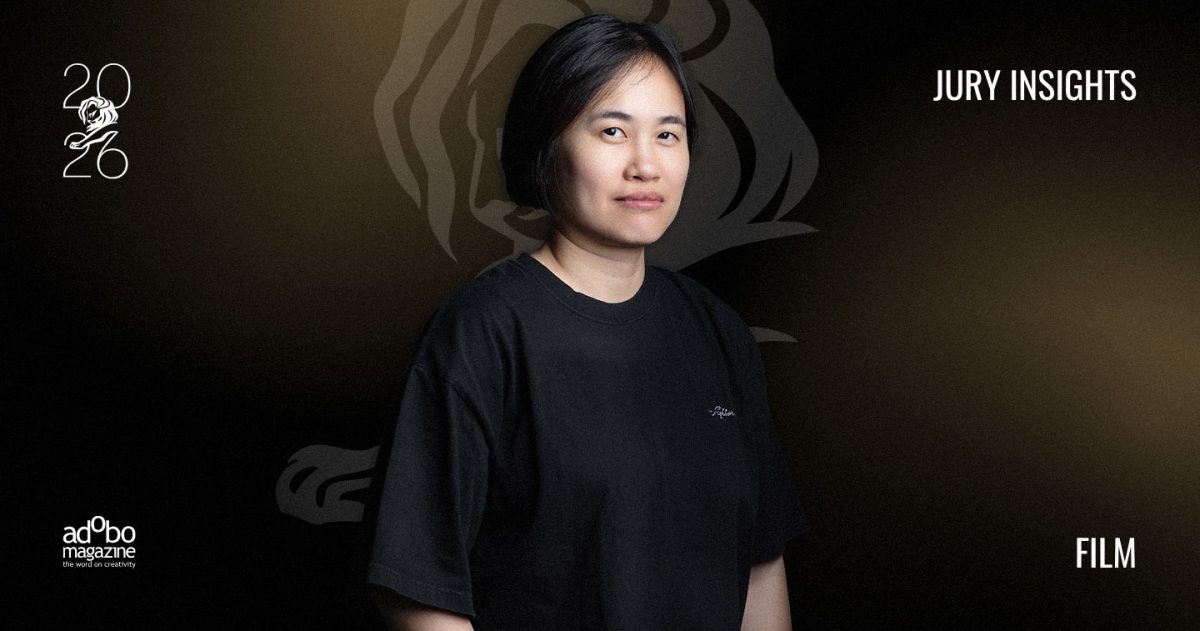
For Publicis Groupe Hong Kong Senior Creative Director and first-time Film Jury member Nonthaporn Ketmanee, the future of advertising lies not in choosing between humanity and innovation, but in bringing the two together.
With more than a decade of experience spanning Thailand and Southeast Asia, Nonthaporn has built a reputation for creating impactful, culturally resonant work that has earned recognition at Cannes Lions, The One Show, Clios, and Epica.
This year, she brought that perspective to one of the festival’s most prestigious juries, offering a unique view of how film continues to redefine itself in an age shaped by Artificial Intelligence (AI) and changing consumer behaviors.
Film no longer just sells products—it creates human connections
As one of the oldest and most prestigious categories at Cannes Lions, Film has always been considered the purest expression of advertising creativity. But according to Nonthaporn, the category is entering a new era — one where emotional resonance matters more than traditional persuasion and where technology serves, rather than defines, great storytelling.
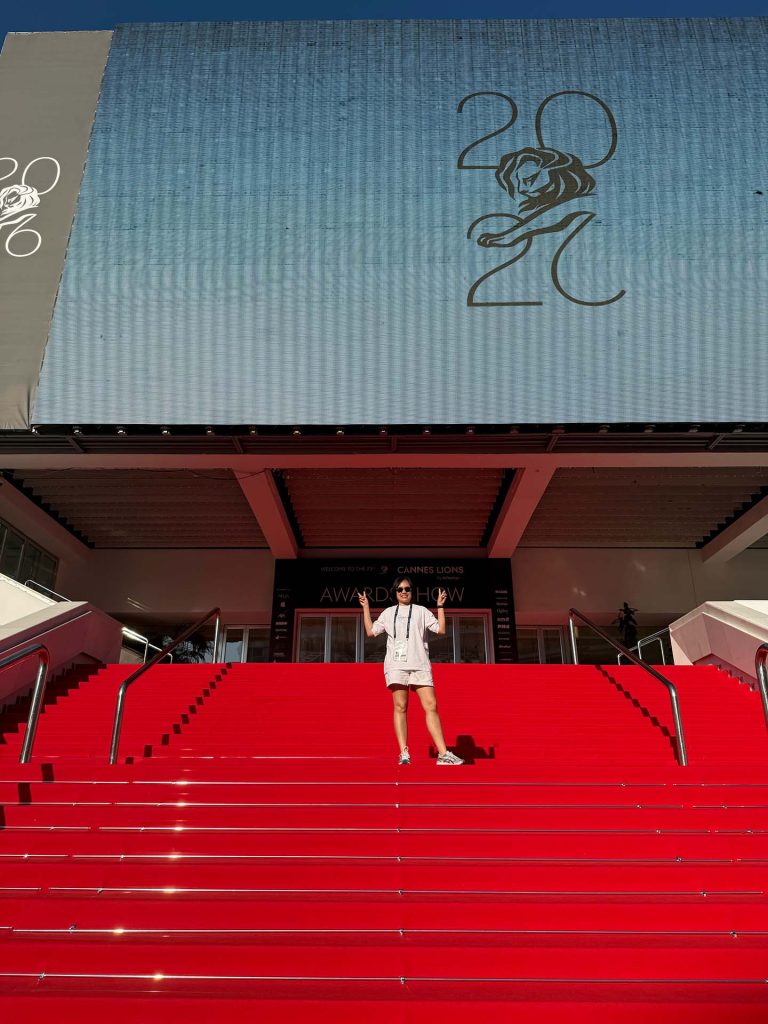
Serving on the Film Jury for the first time this year, she described the experience as both a privilege and an opportunity to witness firsthand how dramatically the discipline is evolving.
“The state of Film is evolving significantly; it’s no longer just about traditional advertising or selling a product. We are seeing a major shift in how brands adapt to rapidly changing consumer behaviors,” she told adobo Magazine in an exclusive interview.
Likewise, Nonthaporn said that the transformation reflects broader cultural shifts. Audiences today are no longer passive consumers of branded content; they are active participants who seek authenticity, representation, and stories that align with their values. In response, brands are moving away from conventional advertising formulas and embracing more nuanced, emotionally driven narratives that place people at the center.
As a result, a body of work increasingly blurs the lines between advertising, entertainment, and cultural storytelling, where film is becoming less about delivering a sales message and more about creating meaningful moments of connection. This allows brands to engage audiences through empathy, shared experiences, and genuine human insight.
“No matter how advanced the technology becomes, the question I always return to is: Does this work genuinely connect with the human heart?”
Throughout the judging process, the use of AI was never treated as a criterion in itself. Instead, it focused on the intention behind the work and the emotional impact it created. Technology, she believes, should be an extension of creative vision rather than a substitute for it.
“We are looking for work that moves people emotionally and intellectually—work that uses technology to amplify the human story rather than replace it,” she explains.
This perspective speaks to a larger truth about the future of creativity. While tools and platforms will continue to evolve, the most powerful ideas are still rooted in universal human experiences that include joy, grief, hope, resilience, and connection. Audiences may be fascinated by innovation, but they remain deeply moved by stories that feel honest and emotionally authentic.
For Nonthaporn, that is precisely why film continues to hold a unique place within the creative industries. Its power lies not only in its ability to embrace technological possibilities, but in its enduring capacity to tell stories that transcend markets, languages, and cultures.
The balance between instinct and creative rigor
For Nonthaporn, judging the Film category requires a careful balance between intuition and rigorous creative analysis. Each piece of work is evaluated through multiple layers, beginning with what she considers the most fundamental element, which is the emotional impact.
The first filter is what she called the “gut check” or the immediate emotional resonance a film creates upon first viewing. A great film, she says, should evoke genuine feelings, whether joy, empathy, excitement, or reflection.
“Does the idea move me? If a film doesn’t land an emotional punch in the first viewing, it’s already fighting an uphill battle,” she told adobo Magazine.
Once a film clears that initial hurdle, Nonthaporn approaches it from the audience’s perspective. She asks whether viewers can truly connect with the story and understand its message, as well as what meaningful takeaway the work leaves behind. For her, the strongest entries are those that resonate beyond the screen and remain relevant to people’s everyday experiences.
“I ask myself: ‘As an audience member, do I truly get this?’ and ‘What is the meaningful takeaway here?’” she said.
The next layer in judging the Film category, for Nonthaporn, involves a more strategic assessment.
Drawing from her experience as a creative leader, Nonthaporn looks for what she describes as the “golden thread” or the seamless alignment between strategy, the core idea, and the execution. While exceptional craft is important, she emphasizes that it must always support the larger creative vision. Every element, from storytelling to production, should work in harmony to strengthen the message rather than overshadow it.
Ultimately, brand impact remains an essential consideration for her as she believes the most compelling work creates meaningful cultural resonance while also delivering tangible value for clients. The films that stand out are not only emotionally engaging and creatively ambitious, but also effective in moving brands and businesses forward.
“My ultimate goal is to find work that creates meaningful cultural resonance while simultaneously driving real results for the client,” Nonthaporn underscored.
Why this year’s winners stood out
Among the award-winning work at Cannes Lions, Nonthaporn believes the Grand Prix winners earned their recognition by doing more than showcasing technological innovation. Instead, they helped define an entirely new narrative about the future.
“They fundamentally set the game,” she said. “Instead of just using technology for spectacle, they used it to define a new vision for the future.”
For her, what made the work especially compelling was its portrayal of AI as a collaborator rather than a competitor to human creativity.
“It resonated so deeply because it didn’t position AI as a replacement for human creativity; it brilliantly illustrated a narrative of coexistence,” she argued, highlighting that the technique allows “the audience to see a future where AI and humans work in harmony.”
Cannes Lions 2026 as a multidimensional era of creativity
Reflecting on the festival as a whole, Nonthaporn sees this year’s Cannes Lions as a decisive break from traditional advertising frameworks, emphasizing that “creativity is becoming increasingly fluid and multidimensional.”
This observation speaks to a broader transformation taking place across the global creative landscape. For decades, advertising categories were largely defined by medium, and formats including film, print, outdoor, radio, and digital, each with its own rules, expectations, and creative language. Today, those distinctions are becoming increasingly blurred as brands experiment with new technologies, platforms, and forms of audience engagement.
At Cannes Lions, this evolution was also evident in the diversity of work being celebrated. Campaigns no longer fit neatly into one category or creative discipline. Instead, they exist at the intersection of storytelling, technology, culture, entertainment, and real-world experiences, creating ideas that move seamlessly across multiple touchpoints.
“It is as if we are observing multiple creative realities and timelines converging simultaneously, pushing us far beyond the conventions of standard ads,” Nonthaporn underscored.
Moreover, Nonthaporn said that this year’s festival demonstrated an unprecedented openness to experimentation and innovation, where the work that stood out often defied easy categorization, drawing inspiration from diverse disciplines and embracing formats that would have been considered unconventional only a few years ago.
“It is an exciting shift, one that proves we have moved past the ‘what’ of traditional advertising and are now firmly in the era of ‘how’ to create experiences that transcend the screen,” she concluded.
READ MORE:
‘Copycats Welcome’ for Clash Royale wins Grand Prix at Cannes Lions
WPP commands the global stage with historic 140-Lion sweep at Cannes Lions 2026