

“You cannot make money out of that.”
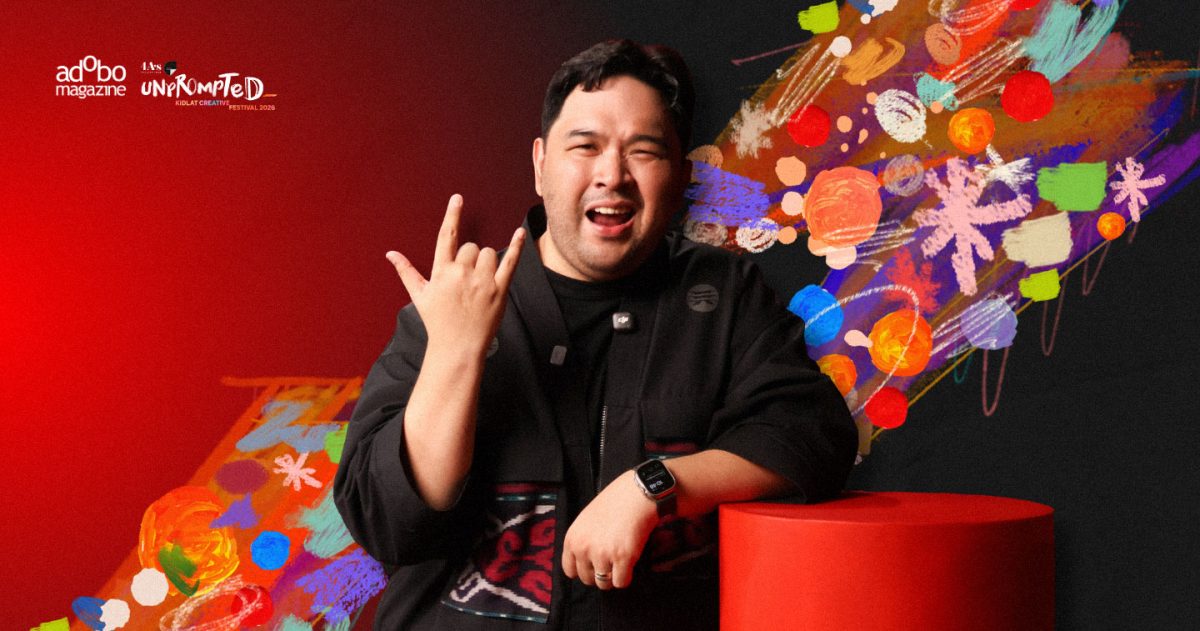
An all-too-familiar response to anyone who dares to turn a passion for dancing, singing, collecting, making, building, or any other creative pursuit into a livelihood. At the 2026 Kidlat Creative Festival, however, former telco marketing exec turned content creator and digital entrepreneur Carlo Ople offered a different proposition: the problem was NEVER that you can’t make money out of creativity. Creatives probably just need a better system for turning their passion into something sustainable.
The founder and CEO of Unbox Group of Companies opened his session arguing that creatives are living through what he calls a “creative renaissance” accelerated by artificial intelligence.
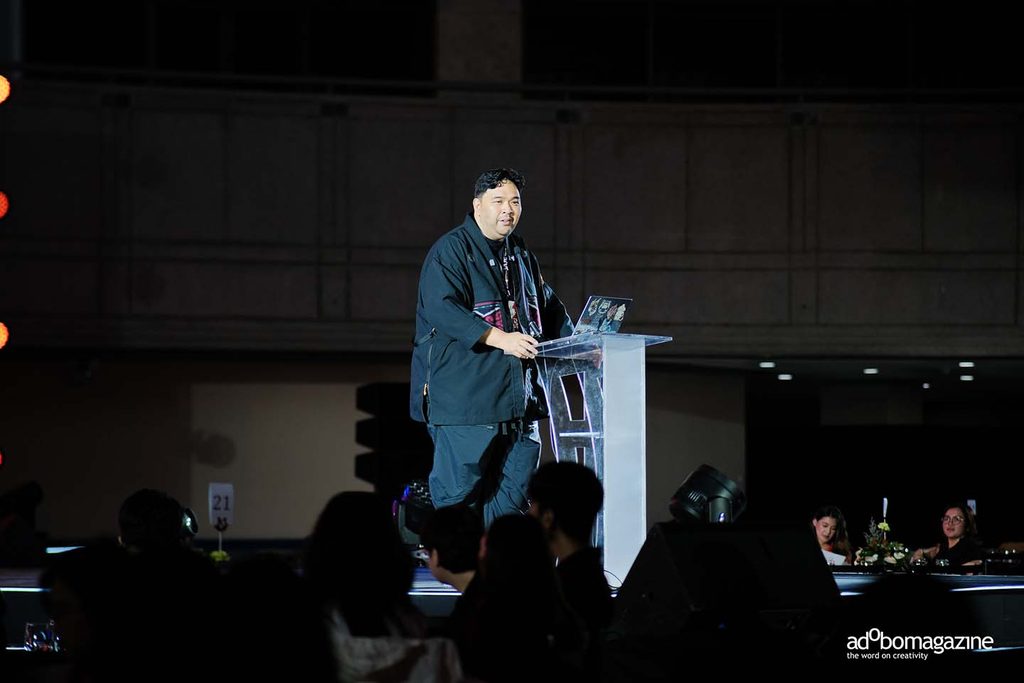
“My entire session today is to try to convince you that we are actually in a creative renaissance, that there has never been a better time to be creative, to take control of your creative destiny, and to live and make money with purpose,” Carlo said.
For him, AI is central to that shift. But rather than framing the technology as a replacement for creative people, he sees it as something that can expand what an individual is capable of.
“Instead of looking at AI from the perspective that it’s going to replace you, I’d argue the opposite,” he said. “You can use AI to go on a counter-offensive—to make things different, to make things change for you and for your life.”
The starting point, however, is not AI. It is purpose.
The ‘Ikigai Engine’
Carlo built his talk around what he calls the “Ikigai Engine,” drawing from the concept of ikigai as a reason to get up in the morning or a sense of purpose.
Through this concept, he believes that purpose exists at the intersection of four things: what you enjoy, what you can make money from, what you are good at, and what contributes to the world.
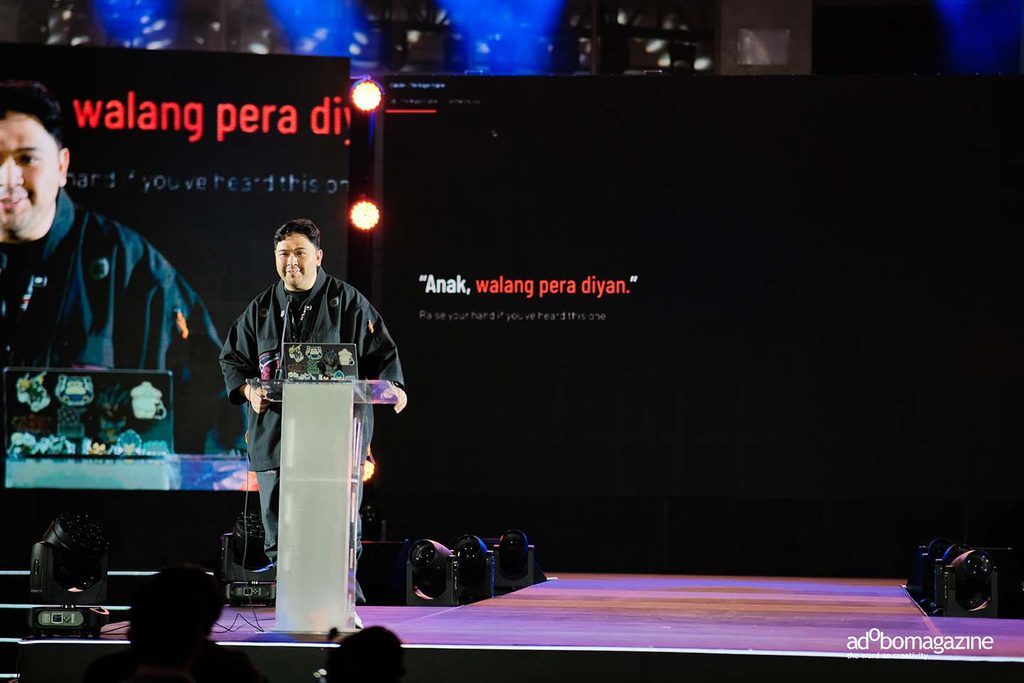
“If you find that intersection, you’re at your natural best,” he said. “You don’t burn out; you don’t get tired in the same way. Despite the setbacks, you’re still smiling and enjoying what you do.”
But Carlo thinks the familiar ikigai diagram is easier to admire than actually use.
“The problem is that this is a beautiful diagram and a terrible manual,” he said. “Nobody has ever actually found the center just by staring at it.” He suggests thinking of ikigai not as a diagram, but as an engine where purpose becomes the fuel, refined into a point of view.
He then flipped this idea to the concept of AI, saying that content becomes the vehicle that takes that purpose out into the world. AI acts as the turbocharger, multiplying what the creator can produce. Monetization then keeps the engine running.
“AI does not replace the driver. It multiplies the distance,” he said.
Content as proof, not performance
The next part of Carlo’s engine acknowledges content as a record of the work, ideas, and convictions behind the creator.
He expounds on this, drawing a distinction between building a creative platform and becoming an influencer, and believing that content should not simply showcase polished achievements or carefully curated highlight reels. It should reveal the thinking behind the work, including the process, the drafts, the experiments, and, most importantly, the opinions that give a creator’s work its distinct point of view.
“Content is proof, not performance,” he underscored, urging creatives to go beyond documenting what they do and speak openly about the ideas and causes they want to champion.
“Process, drafts, and opinions—not highlight reels.”
At the heart of this approach is the willingness to have a point of view and share it consistently.
“Have an opinion,” Carlo said. He then emphasized that a creative platform is built not on a single viral moment, but on ideas shared over time.
“You might go viral every quarter, but if you post every day, if you post regularly, that’s where you’re able to accumulate value and create a significant platform for yourself.”
The Filipino advantage
Filipino creatives, Carlo argues, already have many of the qualities needed to thrive in the creator economy.
“We are natural storytellers. We are bilingual by default. We’re community-driven, not just audience-driven. And we’re native to platforms that the world is still figuring out,” he said.
He also noted that these strengths create an opportunity to reach audiences beyond the Philippines. But the opportunity is not simply about producing more content for more people. It is about recognizing that creative skills can also become the foundation for something personally owned.
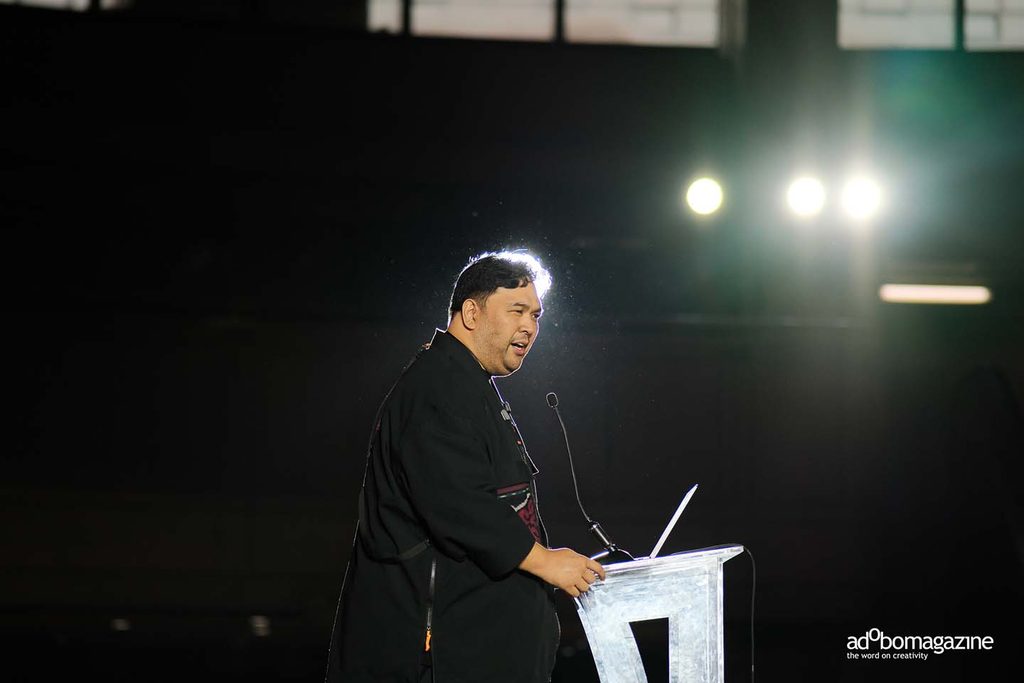
“Take advantage of the fact that you can speak to a global audience,” he told the room. He challenged creatives to consider what could happen if they applied their skills not only to client work, but to ideas of their own, like building a coffee shop, a dance studio, a YouTube channel, or a business that has been waiting at the back of their mind.
“Have you ever thought about applying those skills to a business idea of your own?” he asked.
AI, in this equation, becomes the accelerator. It can help with research, first drafts, repurposing, captions, subtitles, translations, scheduling, and other administrative tasks. But Carlo emphasized that the most important parts of the creative process should remain human.
“What do you keep for yourself? The idea. The opinion. The story. The relationships. And, of course, the final call.”
He demonstrated the potential of this approach divulging some aspects of his own content operation, where one long-form piece can be transformed into short-form videos, carousels, newsletters, threads, podcast assets, and quote cards. He said his team produces 60 to 100 pieces of content daily, with a longer-term goal of reaching 300 to 500. For him, however, scale is only useful when it serves a clear purpose.
From purpose to livelihood
The final piece of Carlo’s Ikigai Engine is monetization. Passion, he argued, needs a system if it is going to become sustainable.
“There’s no money in passion alone, but there is money in purpose with a system.”
That system can take different forms. Carlo shared how his YouTube livestream eventually developed into a monetized community, including a PHP 10,000 monthly membership tier that, according to him, attracted 24 members as of the day before his talk.
The experience reinforced his belief that monetization begins with trust.
“If you’re not genuine, authentic, and clear about your point of view, people won’t believe you,” he said. “They won’t trust you.”

He then proposed a 30-day challenge to the crowd, which includes defining a point of view, building an AI-powered content system, publishing consistently, and launching an offer for the audience that shows up. He also reiterated that creatives do not have to choose between purpose and livelihood.
“Walang pera diyan,” (There’s no money in that.) Carlo recalled hearing. “May pera diyan. May purpose pa. Kaya nga may pera kasi may purpose.” (There’s money to be made in that. And it serves a purpose, too. That’s exactly why it has value, it serves a purpose.)
Ultimately, Carlo believes that while AI can multiply what a creative produces, it cannot provide the reason behind the work.
“AI can generate anything except the reason you’re doing it. So start there. Build the engine, then turn the key,” he concluded.
READ MORE:
In the age of AI, Kidlat Creative Festival 2026 asks what creativity can do without a prompt
Influencers and creators must evolve to thrive, Carlo Ople emphasizes at Digimax: IMMAP Digicon 2023