

AI has officially moved beyond the realm of novelty. It writes headlines, generates key visuals, produces dozens of script variations, and localizes a campaign into multiple languages before a creative team finishes morning coffee. For an industry built around ideas, craft, and human collaboration, the possibilities are both exhilarating and unsettling.
For Emily Abrera, however, the more important question is not simply what artificial intelligence (AI) can do, but what humans must continue to do for themselves.
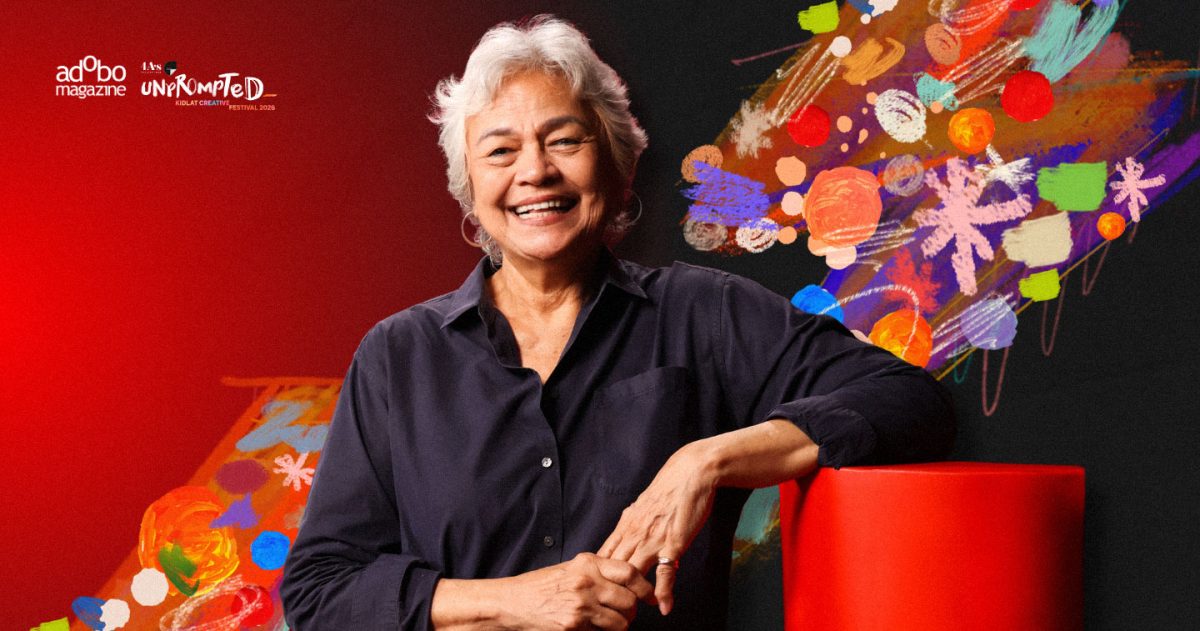
Opening the 2026 Kidlat Creative Festival, the former Chairman and CEO of McCann-Erickson Philippines—where she became the first woman to lead a McCann Erickson agency globally and one of the first women to head a major multinational advertising agency in the Philippines—took on the subject of AI with the candor of someone who has seen the industry evolve through several technological shifts. Emily, who joked that she was “old-fashioned” enough to have written her keynote on paper, acknowledged just how quickly AI has transformed the creative landscape.
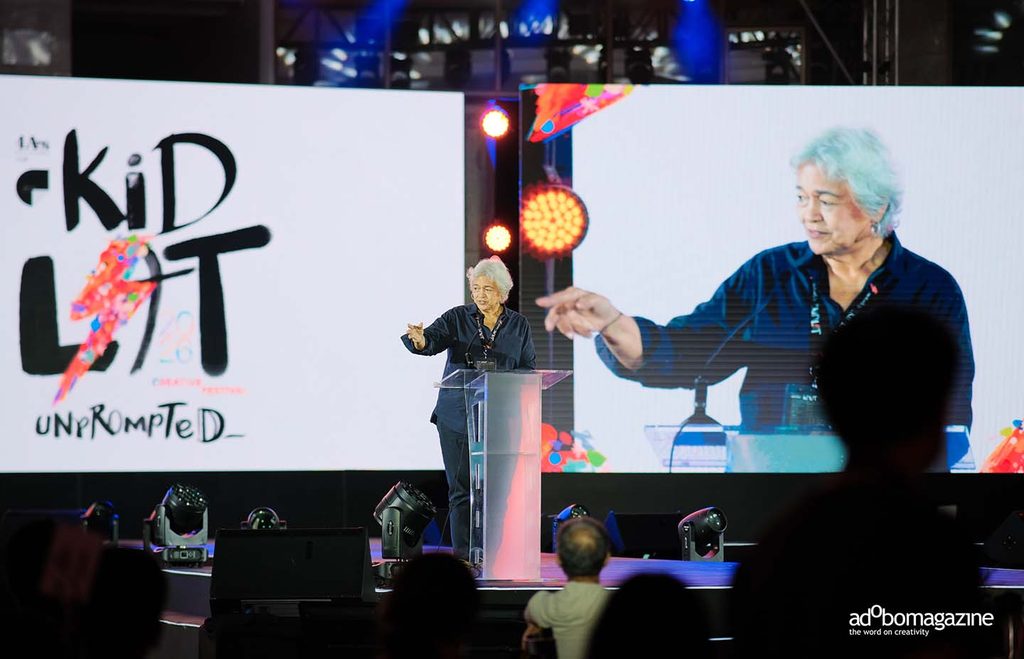
“It’s only been about three or four years, in my estimate,” she said, referring to the period when she began paying serious attention to AI beyond its use as a “party trick.”
“And yet I’d argue that the shift has been just as disruptive as anything I’ve seen in the past 40 or 50 years before it,” she added.
The change, she noted, is no longer theoretical.
“Not long ago, using AI meant a chatbot that occasionally got your brand name wrong. But now it drafts your headlines. It generates your key visual before lunch. It writes 99 versions of a script while you’re still on your first coffee—and then it’s localizing a campaign into eight languages by the time you’ve had your second cup,” Emily mused.
And although the tools have changed at extraordinary speed, Emily also argued that the fundamental temptations of advertising have remained remarkably familiar.
“We are once again being told that speed is the same thing as quality. We are once again mistaking the ability to produce 100 options for the discipline of finding the one true thing.”
That distinction sits at the heart of her argument, saying that AI can make more work. It can make it faster. It can make variations at a scale that would have been unthinkable a few years ago, but more output does not necessarily mean better ideas.
The truth, well-told
Emily then returned to a principle that has remained important throughout her career: McCann’s “Truth Well Told.”
For her, this is where the conversation around AI needs to move beyond efficiency. Sure, technology may change how advertising is produced, but it does not eliminate the responsibility of creatives to understand people, uncover insights, and determine what is worth saying, and that responsibility becomes even more important as AI systems increasingly optimize toward what has already worked.
“We seek the truth. We tell it well. It’s a simple thing,” she explained. “These systems are built to optimize for what performs, for what gets engagement, for the statistically likely next word or image.”
Left unsupervised, she argued, AI will naturally gravitate toward trends, averages, and proven formulas.
“And that is the exact opposite of what this festival is asking of you,” Emily said with emphasis.
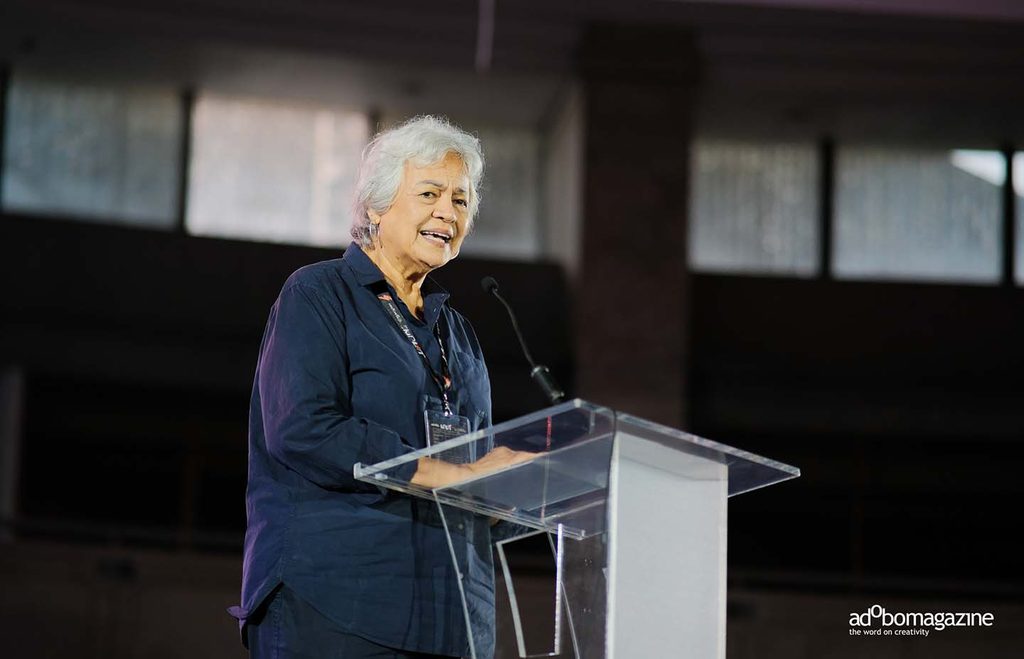
Emily continued her keynote, citing the utmost significance of originality in the creative industry. Per her, if AI is trained to identify patterns from what already exists, then the human creative’s role may increasingly involve challenging those patterns rather than simply generating more of them.
She then posed a series of questions to the audience: what is the thing in you that doesn’t wait to be instructed? What survives without a prompt? Her own answer comes down to five qualities—courage, curiosity, empathy, humility, and honesty.
Emily explained each attribute, one by one.
For her, courage is the willingness to propose an idea “a machine trained to please [but]would never dare suggest,” while curiosity is “asking why one more time than the brief requires.”
Meanwhile, empathy, to her, means sitting across from an actual human being and understanding what that person feels. Humility, on the other hand, means remembering that creative work is “ephemeral” while “still choosing to give it everything.”
Lastly, honesty is the discipline of saying the uncomfortable, truthful thing about a brand, a culture, or ourselves instead of reaching for the more flattering answer.
“None of those can be prompted into being,” she pointed out.
“You cannot type ‘courage’ into a text box and watch courage walk out the other side. You have to bring it yourself, every single time.” That human contribution, she argued, has remained consistent across every technological transformation the creative industry has experienced.
“And that has never once been automatable—not by camera, not by digital, and not by this.”
Yet Emily was careful not to romanticize the future of work. Some creative jobs, she acknowledged, will disappear. She compared the moment to earlier technological disruptions that rendered certain roles obsolete, recalling typesetters and film splicers, or any jobs that once formed an ordinary part of production but no longer exist in the same way today.
The question, then, is not whether change will happen. It is how the industry responds. How creatives can use AI without allowing it to do their thinking for them. She also challenged the industry to protect young writers and art directors from losing the uncomfortable but necessary experience of starting with a blank page.
“You sit in front of a blank piece of paper, and you have to put something on it,” she said. “That’s the challenge. You can’t skip that step.”
“The struggle is not simply part of making the work; it is part of becoming creative. If you skip that step, you skip your own development, your own growth.”
For Emily, that makes mentorship and responsibility especially important as AI tools become increasingly accessible. The industry must create room for young creatives to learn how to think, question, experiment, fail, and eventually develop a voice of their own.
Emily then cited the cases of people whose work helped train these systems.
“How do we make sure the people whose work trained these systems are treated fairly by the industry that now runs on them?” she asked. “How do we give credit where credit is due?”
Her question places AI within a larger conversation about authorship, labor, attribution, and value. Emily’s keynote was not ultimately an argument against AI, but an argument for knowing what technology cannot replace.
Teamwork, always
Looking back on her own career, she said she never claims sole authorship when asked which campaign she is proudest of.
“I always say it’s teamwork. It really is. It always is,” she said.
What she remembers most aren’t necessarily the finished advertisements, but the people and processes behind them: working with young copywriters and strategy teams, talking to ordinary people about why they buy what they buy, and finding the insights that eventually become stories capable of moving consumers and businesses.
She also said that ads are “ephemeral,” believing that “almost everything we make will be forgotten.”
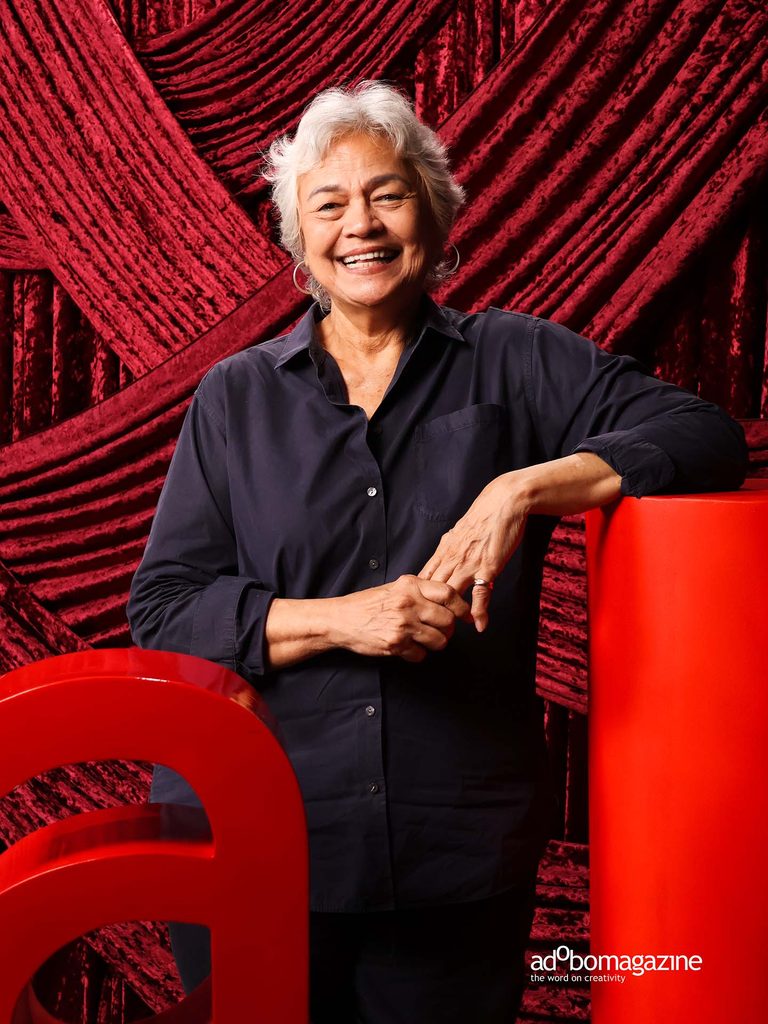
“It’s just meant to be. What isn’t ephemeral is the discipline of finding the truth beneath the brief — hidden in the pages of those briefs we are given every day — and the courage to say it clearly, with humor, with wit, with imagination, with emotion, unprompted, in your own voice.”
“All the stuff that human creatives do with joy, determination, and celebration. That part was never given to us by any entity. That’s the part we brought ourselves. That’s the part we bring ourselves every day,” she concluded.
adobo Magazine is the official creative media partner of the Unprompted_: Kidlat Creative Festival 2026.
READ MORE
In the age of AI, Kidlat Creative Festival 2026 asks what creativity can do without a prompt
MSAP Media Congress: Decoding the future of media through synergy and human-tech flow