
There are many ways to go viral on social media.
While there are content creators who rely on spontaneity and shock value, much of what we see online is the result of careful planning and execution. Gaining traction, however, is as difficult as finding a needle in a haystack, with all the brands and influencers competing for attention.
Then came artificial intelligence (AI), a new player in the tech landscape. Artists are pushing back against it, while many modern marketers, on the other hand, are embracing it.
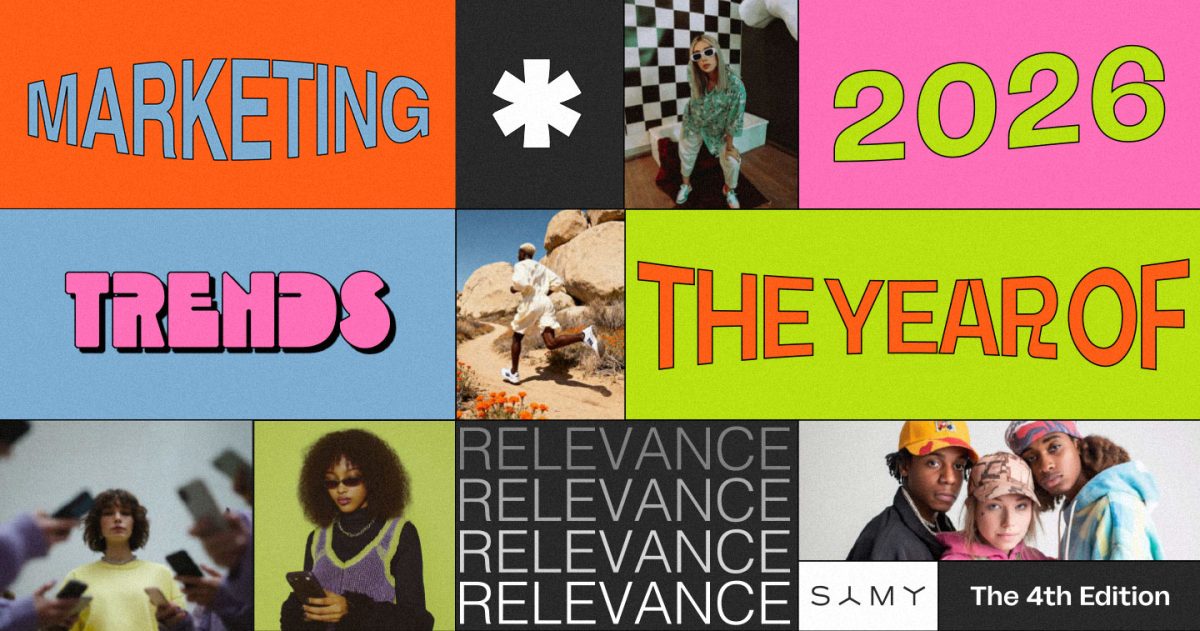
In a recently released report, SAMY, a global advertising agency, shared insights from over 100 Chief Marketing Officers (CMOs) across 22 countries on how the current shifts in technology, culture and creativity will affect Marketing in 2026. This article summarizes insights from the said report.
What marketers will prioritize in 2026
Marketers are expected to leverage AI tools but not to the point of diminishing human touch. The report says that finding a balance between using AI tools and human touch is still an integral part of marketing campaigns. The perfect mix for successful marketing still includes authentic interaction, trust, and engagement.
Case in point, Santiago Lucero, Global Chief Creative Officer at SAMY, said, “AI-driven production now gives every brand access to the kind of high-level content that was once out of reach. They can create more assets, faster and experiment freely, but without a strategic and creative framework that builds the brand and truly resonates with people, it all becomes meaningless.”
With this, marketers are doubling down on AI implementation in 2026. The report says more than 50% of marketers are adopting AI for the first time in history. Despite what many opinions suggest, creativity still holds significant value—accounting for 50% of marketers’ investments.
Storytelling still remains king for modern marketers.
The report says that a perfect blend of storytelling and marketing tools utilization is still a marketer’s top weapon when it comes to campaigns. Communication and collaboration are also crucial. Influencer marketing continues to grow, with 48% of marketers planning to increase their budgets to accommodate it. The industry is projected to reach $250 billion by 2027, according to SAMY’s report.
Public speaking rose from 17% in 2025 to become a significantly recognized “key capability” for identifying inspiring communicators. It skyrocketed to 60%, suggesting a need for leadership visibility and human connection.
A successful ROI is still a marketer’s key performance indicator (KPI) in 2026, but engagement and community growth are joining the race as top priorities of modern marketers in the year of the horse.
On the other hand, traditional media is in decline, with a 41% drop from last year. As the marketing industry shifts to digital media to achieve KPIs, paid media also faces the same dilemma.
Contemporary content strategies
Social media has become a powerful tool worldwide, increasingly shaped and amplified by artificial intelligence. One post can offer millions in engagement, given the right content strategies are in place. Social media has been redefining marketing rules.
A whopping 70% of CMOs is expected to invest heavily in Social SEO platforms (Tiktok, Instagram, Linkedin) as they “prioritize content that resonates in an environment of constant exploration.” This means that CMOs are turning to content that connects to a global audience, not just peer-to-peer socializing. Instagram and other social media platforms have adapted an algorithm that shows content all over the world, even if you don’t follow them.
Modern marketers are also learning that community-led content is one of the backbones of brands. Consumers ask for “real moments” where products, hobbies, passions, lifestyles, and crazy ideas intersect.
Samy’s report highlighted five key trends in social media: familiarity, copy-and-paste content, purpose-driven entertainment, design and tone.
This insight suggests that the combination of strategy and creativity in social media resonates more with the audience. Social platforms driving creativity include Meta and Tiktok.
While Meta leads the creativity game, Tiktok is still the platform with the highest engagement: 2.4 times better than other platforms. Meta still leads the category with 65.8% of the global ad spend.
With the emergence of ads in new players such as Youtube Shorts and Pinterest, such platforms are now gaining traction. Pinterest users are now more likely to buy a product once they see it on Pinterest. While LinkedIn remains the king of B2B connections.
Conversion rates
Conversion rates are still a factor in driving social media marketing campaigns, nearly 48% of CMOs consider conversion as their number one priority in customer journey friction points. While it is easy to get attention on social media, it is not an easy job to get the customers to buy products.
The top three barriers, according to the report are: difficulty tracking ROI (47%), poor integration between social and e-commerce platforms (31%), and low brand trust or credibility (14%).
However, Content Lab Co-Founder Amy Xie says that the solution to this is finding the exact audience and showcasing moments that truly grab attention, speaking from the user’s perspective, and focusing on how your product solves real-world problems.
“Social commerce isn’t just selling; it’s a single moment where awareness, validation, and purchase collide. The scroll has become the shelf, and creators are the connectors. Show up with the right product, at the right time, and in the right context. Then, inspiration turns into instant action,” SAMY Global Director of Social Commerce Patricia Aragón, said.
This TikTok video from Guru Nanda sets the perfect example of content that drives its users to buy a product. It also shows how a potential customer can solve problems in health.
Influencer marketing
According to The Influencer Marketing Hub’s report, U.S. organizations have invested $50,000 on average in influencer programs.
This figure pales in comparison to the top 15%, which are investing $500,000 or more — signaling just how seriously leading brands are doubling down on influencer marketing.
SAMY predicts that brands will face an already-proven strategy to attract customers this year: influencer marketing that is authentic.
Using data-driven strategies that will allow them to measure the reach and performance insights of influencers, brands will blend creativity and brand purpose to produce content and reels that drive results. The KPI will be performance, perception, and sustained brand growth.
“The future of influencer marketing lies in building strategic ecosystems, not transactional collaborations. Brands must empower creators, co-create content, and blend creativity, culture, and commerce to unlock scalable growth,” Ainoa Brenes, Global Head of Influencer Marketing at SAMY said.
In 2026, roughly 45% of marketers have collaborated with micro-influencers to enhance authenticity. This is because these micro-influencers deliver higher engagement rates than macro-influencers.
Niche influencers offer more trust to consumers because they are perceived as “authentic” when they share unfiltered content on their social media profiles.
As an example, SAMY cited Soylent Nutrition’s content.
The real winner in marketing
Generative AI is shaking up the creative world. What was once a niche technology is now a mainstream tool. In the past four years, roughly 40% more CMOs have incorporated the tool into their creative workflows.
But this is not to disregard the dangers of AI. Rising from the depths is the rise of “low quality, automated output – simply speaking, the ‘AI slop.’ Research by the MIT advises against this type of content, as 95% of AI implementations fail to generate ROIs. Instead, this research recommends using AI to align with business goals, not just for the sake of generating fast, lack of depth, and cheap AI Slop.
Much of the debate today focuses on where we draw the line in terms of using AI in creativity. People online are protesting against the use of AI and its replacement of creatives, SAMY offers a different perspective. Overusing repetitive prompts raises concerns about limiting cultural diversity.
“AI isn’t replacing creativity; it is amplifying it. Mastering new tools enables sharper, faster, more engaging content. But we cannot forget what truly drives relevance and surprise, the real engines of engagement: human creativity.” Santiago Lucero, Global Chief Creative Officer at SAMY, said.
More than 57% of CMOs agree that AI helps in creativity by generating ideas and concepts faster, while 51% still believe humans win over AI when it comes to narratives. Gartner, a management consultant company, calls this “combinatorial disruption” – the fusion of AI, design, and data.
Half of CMOs believe that culture directly drives business value. Cultural relevance remains one of the most effective ways to connect with social communities and build meaningful engagement.
“Brands that demonstrate genuine understanding — joining conversations with context, empathy, and purpose — build credibility faster than any campaign.”
This just shows that despite rapid AI advancements and endless waves of content, genuine human connection remains the ultimate differentiator. Emotional resonance — not volume — is what truly sets brands apart. As the report states, “It’s not about being the loudest voice, but the most resonant one.”
“We live in the era of highly social humans, people who buy based on values, actions, and interactions. They expect brands to know them, support them, and be truly useful. That’s why communication must feel personal, relatable, trustworthy, authentic, and relevant.” Alex Hill, Chief Strategy Officer at SAMY, said.
READ MORE: