
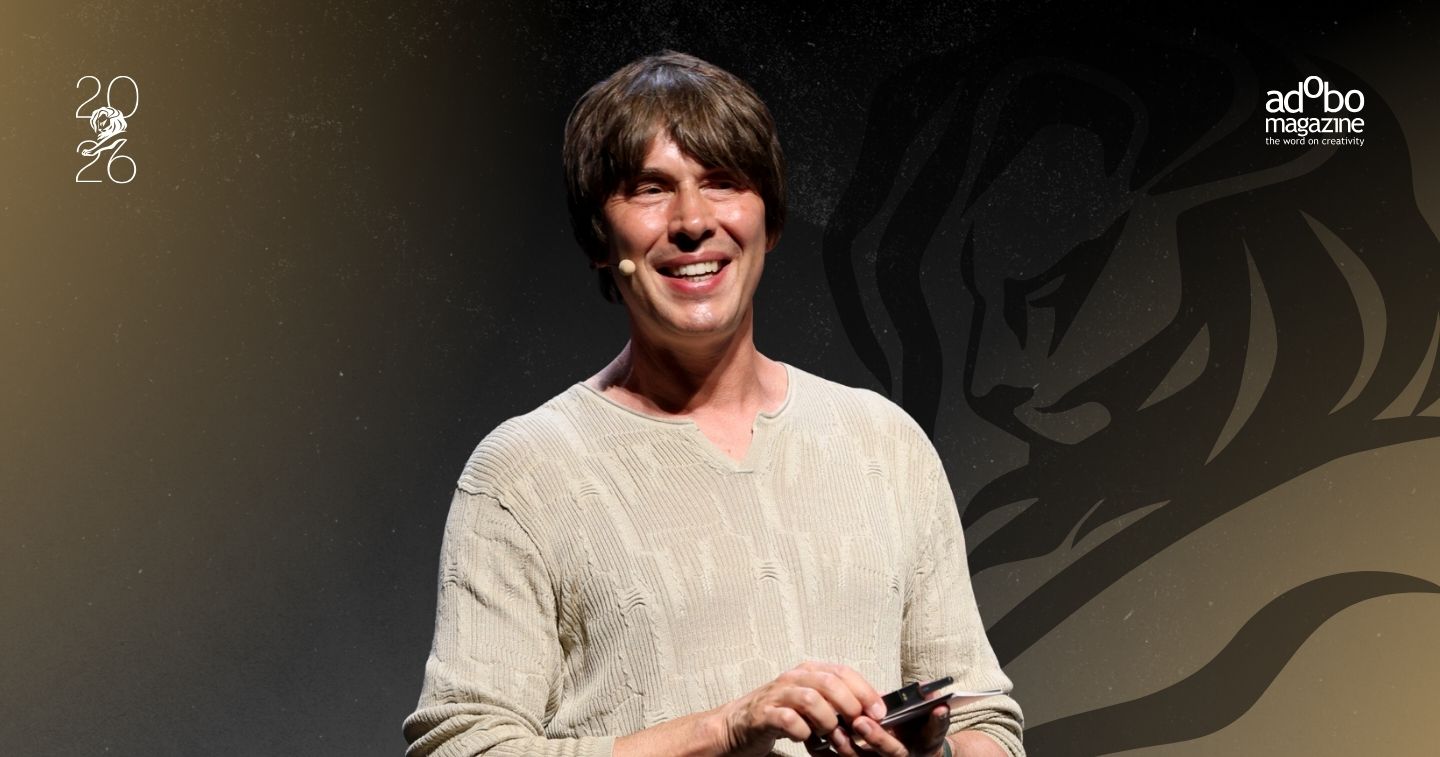
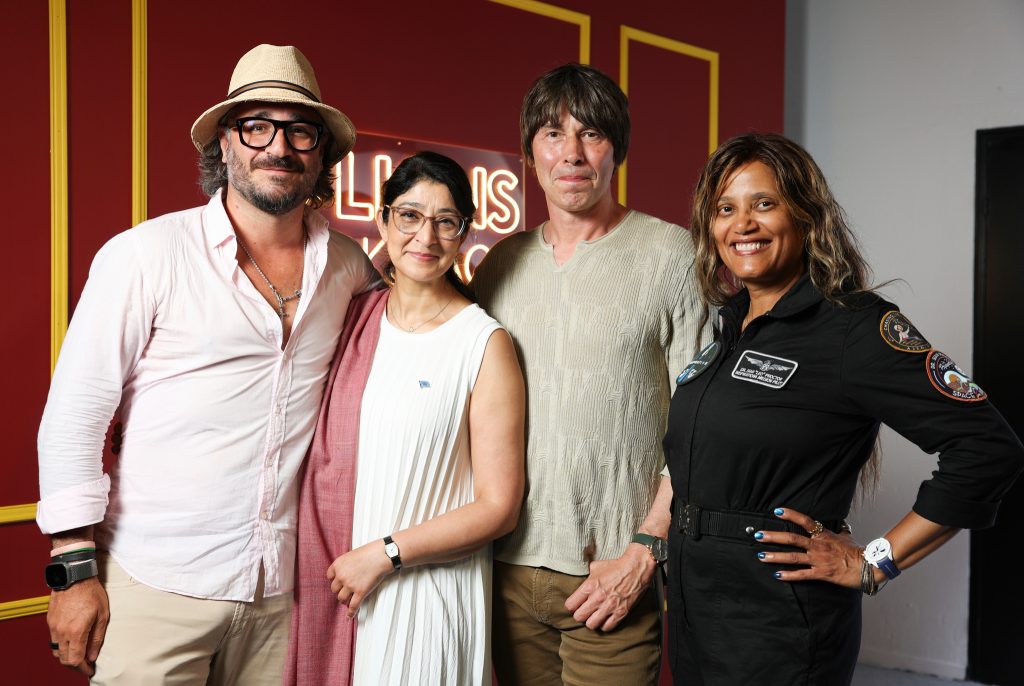
At a Cannes Lions festival dominated by the now-familiar conversations around AI, creator economies, and performance marketing, one session stood apart by looking far beyond the Croisette—and far beyond Earth itself. Tucked into the Debussy Theatre under the provocative title “Space Isn’t the Future – It’s Your Brief,” the conversation brought together physicist Brian Cox, astronaut-artist Dr Sian Leo Proctor, and United Nations Office for Outer Space Affairs (UNOOSA) Director Aarti Holla-Maini to challenge the world’s leading marketers and creatives to think differently about space not as science fiction or spectacle, but as the next great strategic and creative frontier.
Presented by UNOOSA and the PVBLIC Foundation, the session was one of the most unexpected and arguably most profound at this year’s festival. In a place where ideas are often measured by immediacy—what’s trending, what’s converting, what’s driving engagement—Cox opened with something far bigger: perspective.
From Croisette to Cosmos
On the giant screen behind him appeared one of his favorite images, a photograph of Earth and the Moon captured from Martian orbit, the kind of image that reduces all human urgency into something small, fragile, and fleeting. From there, he pulled the audience even further out, into the cosmic web visualized through data from the Dark Energy Spectroscopic Instrument (DESI), a map of galaxies stretching across incomprehensible distances.
Each point of light, Cox explained, was an entire galaxy, each containing hundreds of billions of stars. The scale was overwhelming, almost terrifying. Yet the point was not insignificance. It was value.
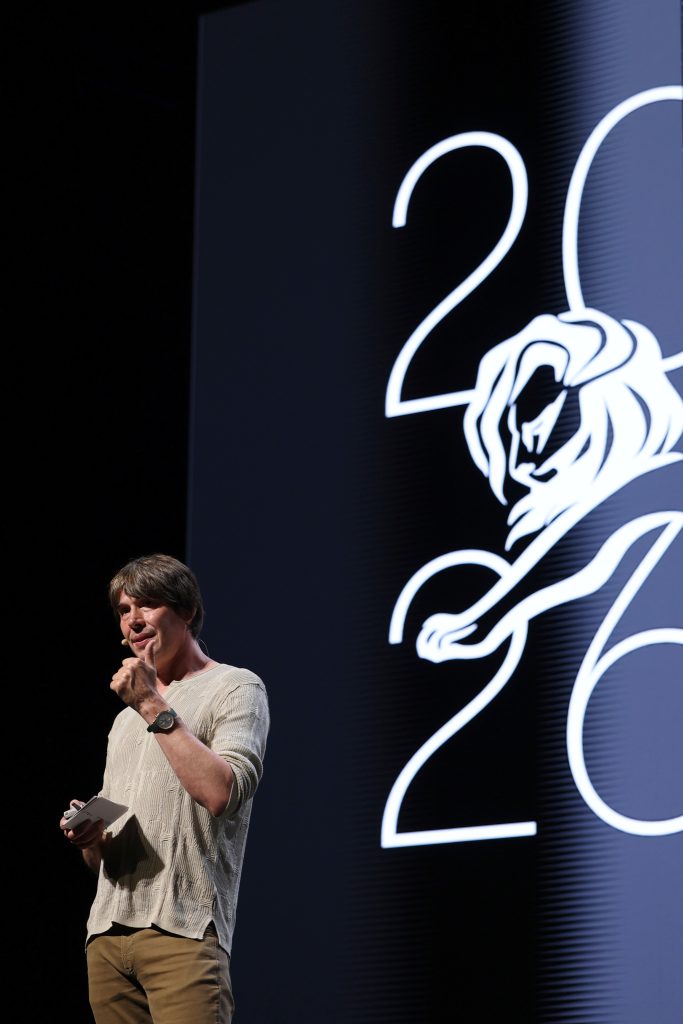
“We are physically insignificant,” Cox said, “but potentially of immeasurable value.”
It was an unusual way to begin a conversation at Cannes, but perhaps that was precisely the point. Cox offered a reminder that the best storytelling has always been about scale—about situating humanity within something much larger than itself.
Space is already running your business
That cosmic framing quickly gave way to something more immediate. If Cox brought wonder, Aarti Holla-Maini brought urgency. Her message was direct: space is no longer a distant frontier. It is already embedded in the very systems that keep modern civilization functioning. Most people still associate space with rockets, billionaires, or fantasy, she said, but the truth is far more practical—and far more consequential.
“Space is totally embedded into the fabric of our society today,” she said.
From GPS and Google Maps to financial transactions, ambulance services, air traffic, supply chains, weather forecasting, and communications, nearly every modern convenience depends on space-based infrastructure. Remove it, and civilization would begin to fail with alarming speed.
Cox cited a striking statistic: 18% of the UK’s GDP now relies on space infrastructure, a number that underscores how deeply integrated orbital technology has become in economic life.
“If GPS disappeared,” Maini explained, “financial markets would collapse, electricity grids would fail, ATMs would stop working, supply chains would stop.”
For an audience of marketers and brand strategists, it was a startling reframing. Space, they were being told, is no longer a niche category or futuristic concept—it is the invisible operating system of modern business.
The story brands haven’t told yet
The irony, of course, is that despite being so central to everyday life, space remains largely invisible in public consciousness. That invisibility, Holla-Maini argued, is exactly the problem.
“The creative industry shapes what people care about,” she said. “And if people don’t understand space, they won’t protect it.”
That protection has become increasingly urgent. Already this year, nearly 3,000 new objects have been launched into orbit, surpassing the total launches of the previous year with months still to go. The congestion creates growing risks—from collisions to debris, each one capable of disrupting the infrastructure on which billions rely.
Holla-Maini shared how UNOOSA, despite its vast mandate, operates with just 21 staff, a startling mismatch between responsibility and resources. It was one of the session’s more sobering revelations: one of humanity’s most critical infrastructures is being overseen by an office so small many people within the UN itself don’t even know it exists.
The overview effect
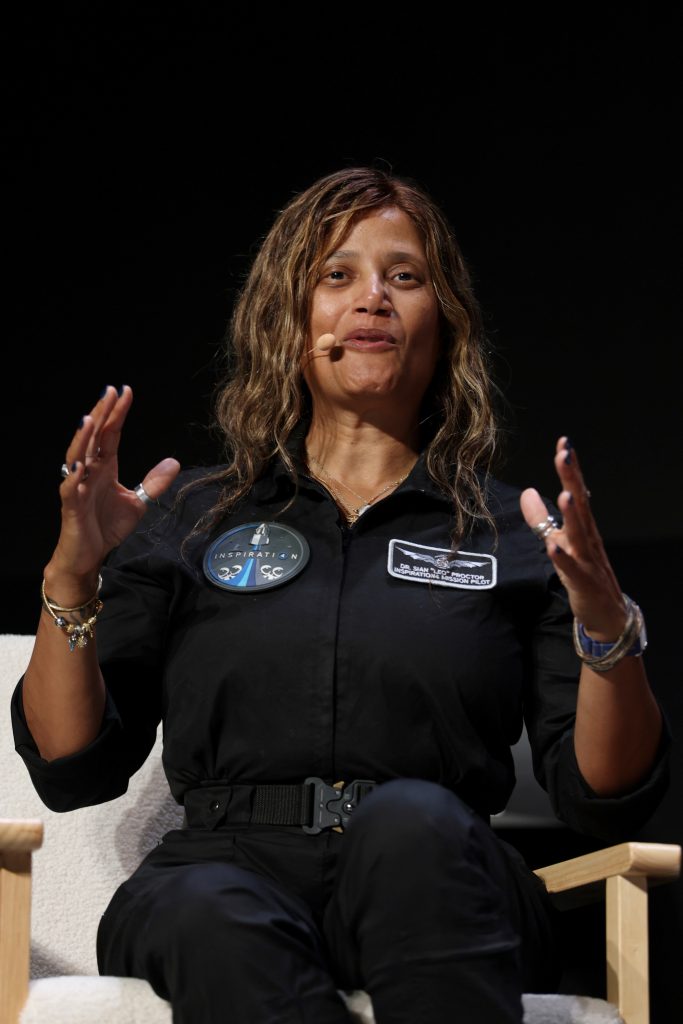
If Holla-Maini grounded the conversation in policy and infrastructure, Sian Leo Proctor brought it back to the human experience. The first woman commercial spaceship pilot and the world’s first artist-astronaut, Proctor spoke about her three-day mission to space in 2021 and the life-altering perspective it gave her.
Astronauts call it the overview effect—the emotional and cognitive shift that comes from seeing Earth from orbit—but Proctor gave it her own poetic language.
She called it Earth light.
“I realized all the light on my face was Earth light,” she said. “Our planet takes sunlight and transforms it into Earth life.”
It was one of the most powerful moments of the session, and in a room filled with storytellers, it landed deeply. For Proctor, the realization wasn’t just scientific; it was artistic, spiritual, and profoundly human. It reframed Earth not simply as a planet, but as a living canvas—a singular place where life, intelligence, and meaning have emerged.
The next creative frontier
That emotional truth, perhaps more than any technological argument, was what connected space to creativity. Because beyond satellites and policy frameworks, space is becoming a new territory for ideas—not because brands will start building rockets, but because space technologies are reshaping the very sectors brands care about: climate intelligence, agriculture, mobility, disaster response, health, and global connectivity.
As Holla-Maini reminded the audience, every single one of the United Nations Sustainable Development Goals is underpinned by space technology.
That should matter to brands. Increasingly, the expectations placed on business extend beyond products and profits into sustainability, equity, and long-term impact. In that context, space is not simply an innovation category—it is a responsibility category.
“Your work has to go beyond advertising and PR,” Holla-Maini said. “It needs to accompany responsibility.”
That line carried particular weight at Cannes, where brand purpose can sometimes feel abstract or performative. Here, purpose was grounded in something tangible: the systems that sustain life on Earth and the future possibilities beyond it.
Look up
By the end of the session, one thing had become clear. Space is no longer just a metaphor for ambition, nor merely an aesthetic borrowed by brands to signal futurism. It is strategic, operational, political, and increasingly creative. It is, as the session title insisted, part of the brief.
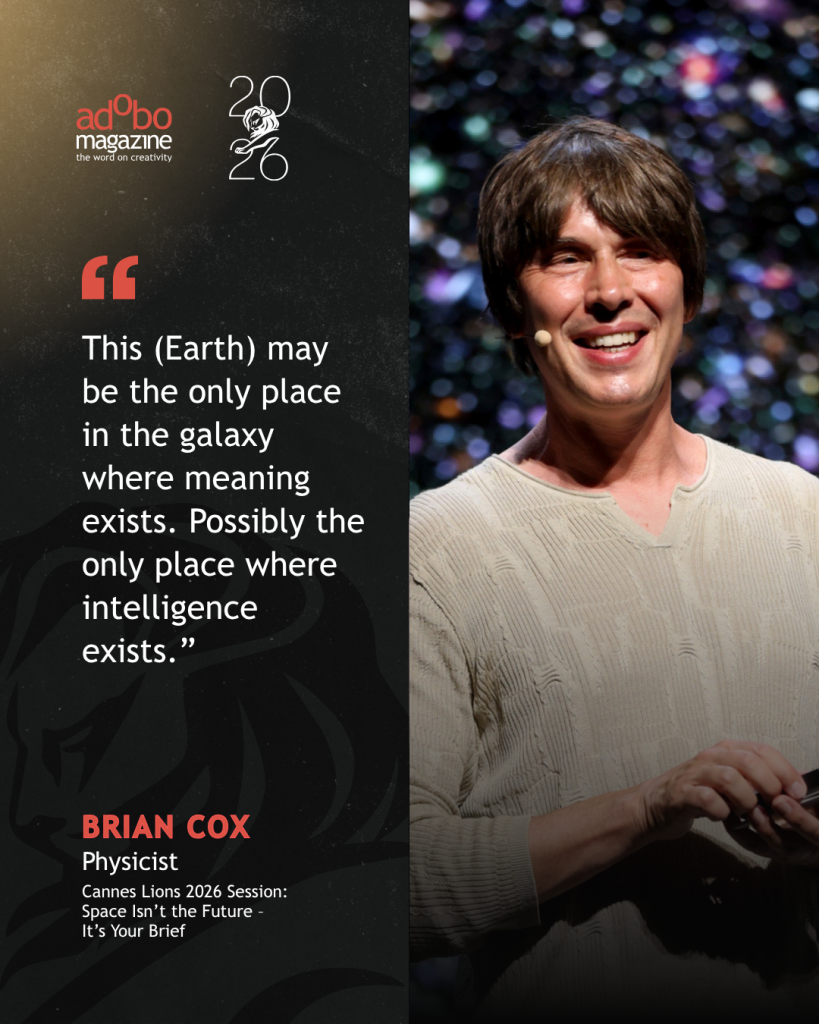
Cox returned to the paradox he began with: in a universe of two trillion galaxies, Earth may be physically insignificant, but it may also be the only place where meaning exists. That possibility, he suggested, makes its protection and our expansion beyond it, one of humanity’s most important stories.
And for brands willing to think beyond the next quarter, beyond the next campaign, and beyond the familiar agenda of Cannes itself, space may prove to be the biggest brief of all.
As Proctor left the audience with one final challenge, it felt like the most important call to action of the week:
“If you raised your hand to go to space, then you have to be part of the solution.”
At Cannes 2026, that may have been the most powerful brief of all: simply, look up.