

MANILA, PHILIPPINES – When Leo Burnett Group Manila and Publicis Group Philippines Chief Creative Officer Raoul Panes and his team started fleshing out the “Unbranded Menu” for McDonald’s Philippines, they already knew it was a good idea. What they didn’t know was that this was an understatement of the sensational success this campaign became.
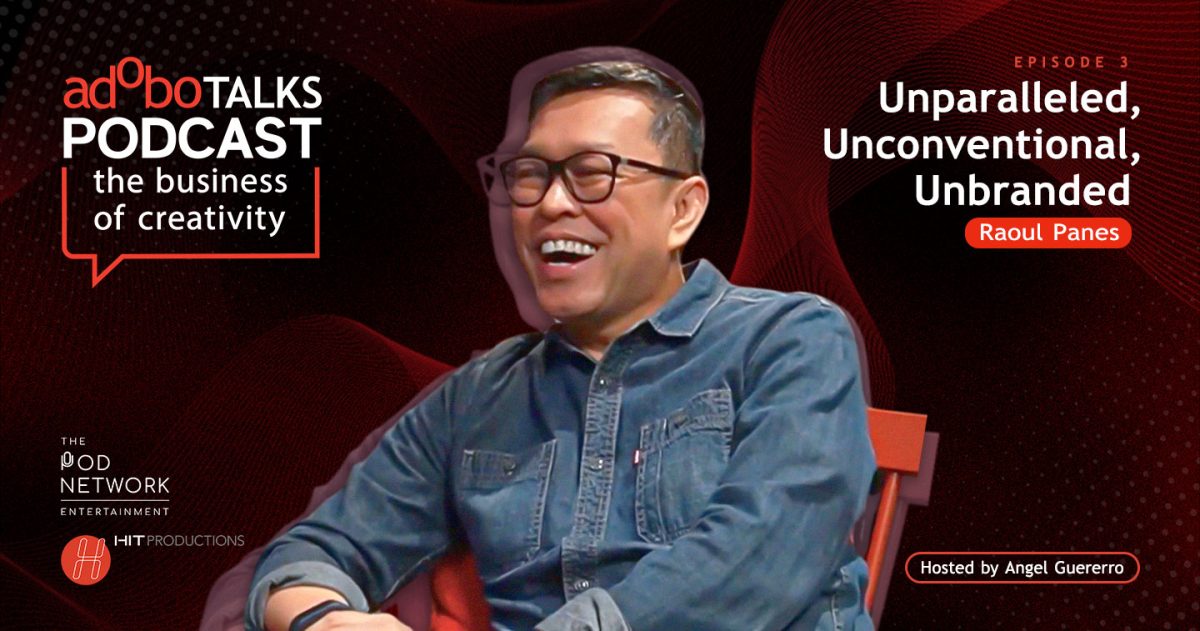
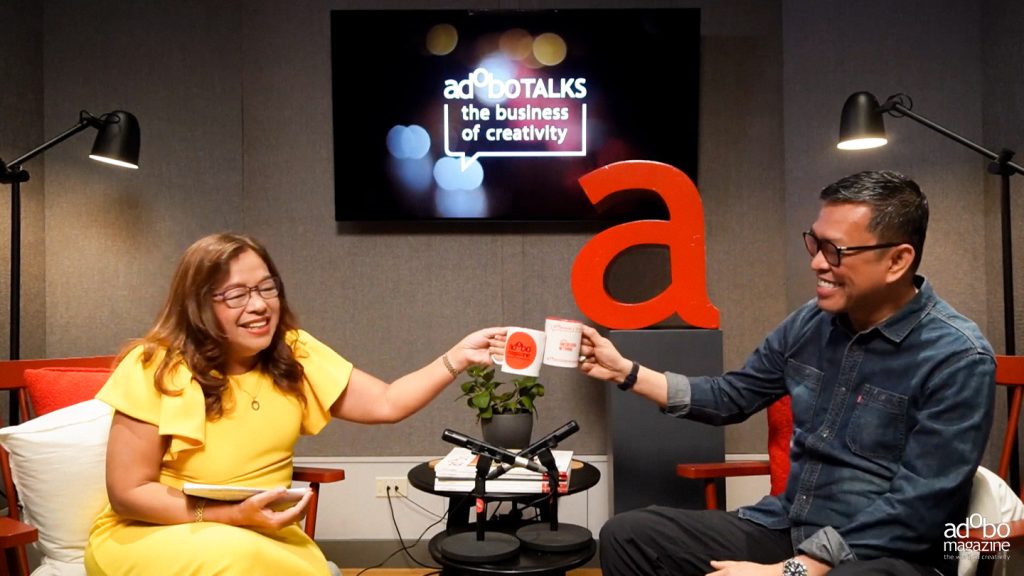
For the third episode of the adoboTalks podcast | the business of creativity, hosted by adobo Magazine Founder, President, and Editor-in-Chief Angel Guerrero, Raoul shared insights about the “Unbranded Menu” and the role of technology and the new generation of creatives in the future of the ad industry.
Raoul got his foot in the creative door with stints at agencies like J. Walter Thompson, Publicis JimenezBasic and BBDO Guerrero Ortega before taking his current post. Throughout the years, he honed his craft behind the scenes of campaigns that went on to win accolades at the Cannes Lions, D&AD, Effies, Clios, ONE SHOW, and more, leading to his eventual induction into the 4A’s Philippines Creative Guild Hall of Fame.
But while he’s well-acquainted with the awards stage, that doesn’t mean that the success of “Unbranded Menu” was run-of-the-mill. This venture into the gaming world led him and his team to new heights.
The awards the campaign racked up quickly became hard to keep track of. Its Grand Prix triumphs at Spikes, Mad Stars, and ONE Asia and its metals in Cannes Lions are just a few of the long list of wins.
In his podcast episode, “Unparalleled, Unconventional, Unbranded,” Raoul gave a peek behind the curtain of this scene-stealing campaign and where they – not just his teams, but Filipino creatives as a whole — are heading next.
Unbranded, but also undeniably ubiquitous
McDonald’s Philippines turned the gaming multiverse into a treasure hunt with “Unbranded Menu,” challenging gamers to spot virtual food look‑alikes of Big Macs, fries, cheeseburgers and more hidden across hundreds of video game titles, and share it with the hashtag #ThisIsMcDonalds.
The campaign took more than a year to craft into the success it became, from initial ideation in the middle of 2021 to implementation in the last quarter of 2022. And the result was the perfect payoff to McDonald’s decades-long climb to cultural icon status.
“That’s how iconic the brand is,” Raoul told Angel. “Even when unbranded, there’s a certain familiarity with the way they are stacked, the way they’re packed.”
He’s right. It doesn’t matter that the pixelated fast food in these titles never really bore any logos in the gameplay. Users saw these and immediately thought: This is McDonald’s. A brand with golden arches so well-known that they didn’t actually need to be there.
And what do you do when you’re working with a worldwide chain that has gone past brand recognition? Cement it by proving and utilizing that ubiquity.
“The red fry box, the way the Big Mac is stacked with the cheese peeking out … [They’re] iconic images for McDonald’s,” Raoul said. “And there would be those that may look generic, but because McDonald’s is the iconic brand, you can easily brand it as McDonald’s, right?”
The recipe for hacking the gaming world? Respect the players’ environment


With that ubiquity came an advantage: Leo Burnett and Publicis could tap into gaming without bombarding them with actual branded ads.
“We understood the gaming community as people who are averse to big brands intruding into their gameplay and all that,” Raoul explained. So, they turned to influencers.
They started by bringing in the big guns: Alodia Gosiengfiao, one of the country’s biggest names in gaming with more than 13 million followers across Facebook, Twitch, TikTok, YouTube, and more.
When Alodia posted what was really just an everyday, unbranded burger from the gameplay of Grand Theft Auto, with the hashtag #ThisIsMcDonalds, everyone agreed that it looked like the classic Big Mac. And, like Raoul and his team intended, her followers took it as a challenge: Can more gamers find more lookalikes in their beloved games?
With Alodia and more influencers on board, the campaign took off — all without any money spent on actual in-game brands.
“You don’t spend on sponsorships,” Raoul said, recounting the perks of virality that comes from just fan-favourite streamers and their followers posting their own #ThisIsMcDonald’s finds. “They started the ball rolling, and then the brand jumped in when the conversation was happening already.”
For him, co-opting, not colonizing, their culture is key to what brands need to remember as they attempt to reach gamers:
“You need to respect their environment. Don’t just go in there, splashing your logos into the gameplay,” he said. “It’s really just simple logic, right? I mean, you’re doing something sacred, something that you value, and here comes a big brand shouting their names at you.”
“So, we wanted to bring in the campaign through people they respect, people they follow, people they like.”
A single pixel in the bigger picture of Filipino creative excellence
With the campaign’s booming international success, naturally, it brings about discussions about Filipino works’ place on the global stage and whether our roster of creatives measure up to the rest of the world.
But for Raoul, it’s no question at all. Filipinos already belong among their fellow decorated peers.
“We’re not the first Filipino winners in international shows,” Raoul said. “There have been several great campaigns that have won in the past, and that just proves that Filipinos can be up there as well and on the global stage, with great ideas and great execution.”
“It is really a matter of crafting and ideation, [and] making sure that your ideas can go toe-to-toe with the world’s best.” Then, he added, “To make that happen, of course, we need great clients, and we’re very lucky to have McDonald’s as our partners.”
For Filipino creatives to continue thriving both on the local and global stage, it also requires clients that are open to creative ideas that break the mold. While it’s something they’ve found in their partnership with the fast food giant, Raoul hopes more brands deliver on that.
“There needs to be a lot of unlearning in terms of how [brands] view the work and what kind of messaging [they] want,” Raoul posited. “I know that there are quite a number of clients that always say they want to win in Cannes, but unfortunately, it doesn’t translate in terms of the actual work, because some of them, when they look at the work, they go back to their old habits.”


The future of creativity: AI and the new generation
With that said, obviously, Raoul is far from averse to seeing how the status quo can evolve from here.
For instance, “Unbranded Menu’s” foray into gaming is far from the end of how creatives can leverage tech. That conversation, of course, is dominated by the AI revolution — something that Raoul and his team have already been welcoming.
“We’re embracing it,” he said. “We have people in [Publicis Groupe Philippines] who are already using it.”
Raoul goes on to enumerate the different innovative ways AI has taken root in teams’ creative processes, from creating storyboards and presentations to creating deep-faked ads as pegs to convince the clients to use certain endorsers.
“But of course, with technology, it’s all about [using] it with care and a lot of responsibility,” he added.
When asked if AI could take away from the genius of creativity, his answer was simple: “It can, but you shouldn’t allow it to.”
“Don’t rely on technology to do everything for you, because you’ll get lazy. Your ideas will probably [remain in] a certain mold [and go] against letting your human instincts be more experimental and wide.”
Thankfully, Raoul doesn’t seem to have any qualms about whose human instincts will be key to what’s next for the industry. With the new generation of creatives, he does think that the ad industry is in good hands.
“[I’m not a] grizzled veteran who says the way we did it 20 years ago is the best way to do it,” he said. “Of course, you have to coach them, mentor them … But, you know, I’m amazed by the talents that we have.”
“They’re very much into digital, so I learned a lot from them. [During] this whole experience on ‘Unbranded Menu,’ I worked with a lot of young people,” he recalled. “We brought in people who love gaming. Young people, especially.”
But talk of the future needs more than broad strokes. Big ideas like AI and the next generation are part of the picture, but so are the next concrete steps. After a record-breaking awards streak that very few, if any, local campaigns can match, another question is: what’s next for Publicis Groupe and Leo Burnett?
“We can’t [go into details], but for sure, like any ambitious agency, you never want to rest on your laurels, right? You won last year, and that shouldn’t be the end of it. [We’re] no one trick pony,” he said. “So, yeah, last year, even as we were winning, we were already working on several campaigns, and we’re still working on them. That’s how it goes. That’s the cycle of doing creative work in the agency.”
Ultimately, Raoul and the “Unbranded Menu” demonstrated how Filipino agencies can merge authenticity, innovation, and storytelling to resonate worldwide. Beyond awards, Panes reflected on the future of the industry—embracing AI responsibly, empowering young creatives, and continuing to reimagine what world-class Filipino creativity can be.
Specifically, here are the lessons Raoul shared about campaign and brand’s authenticity, innovation, and storytelling:
- The power of ubiquity: McDonald’s “Unbranded Menu” proved that a brand’s identity goes beyond its logo—when done right, even unbranded visuals can trigger instant recognition and emotional connection.
- Authenticity over intrusion: By respecting the gaming community and collaborating with trusted influencers like Alodia Gosiengfiao, the campaign went viral organically without disrupting gameplay.
- Global recognition for Filipino creativity: The campaign’s international wins reinforced that Filipino talent can compete with the best globally through strong ideas, precision, and bold creative partnerships.
- Creative partnerships matter: Raoul highlighted the importance of clients like McDonald’s who trust agencies to push boundaries and embrace unconventional ideas.
- Responsible use of AI: AI is a creative ally, not a replacement. Panes emphasized balancing innovation with human intuition to keep creativity authentic and experimental.
- Empowering the next generation: Young, tech-savvy creatives were instrumental to the campaign’s success—showing that collaboration between veteran leadership and new talent drives modern creative breakthroughs.
- Never rest on success: Despite record-breaking wins, Raoul insists on constant reinvention: “You won last year, and that shouldn’t be the end of it. [We’re] no one-trick pony.”
Catch the insightful conversation with Raoul Panes on Episode 3 of the adoboTalk Podcast on Spotify, YouTube, and Soundcloud. The adoboTalks Podcast | the business of creativity, is presented by adobo Magazine, the word on creativity and produced in partnership with The Pod Network and Hit Productions.